Coral Bleaching and Climate Pressure on Riung Reefs
Riung Flores Editorial Desk 11 min read
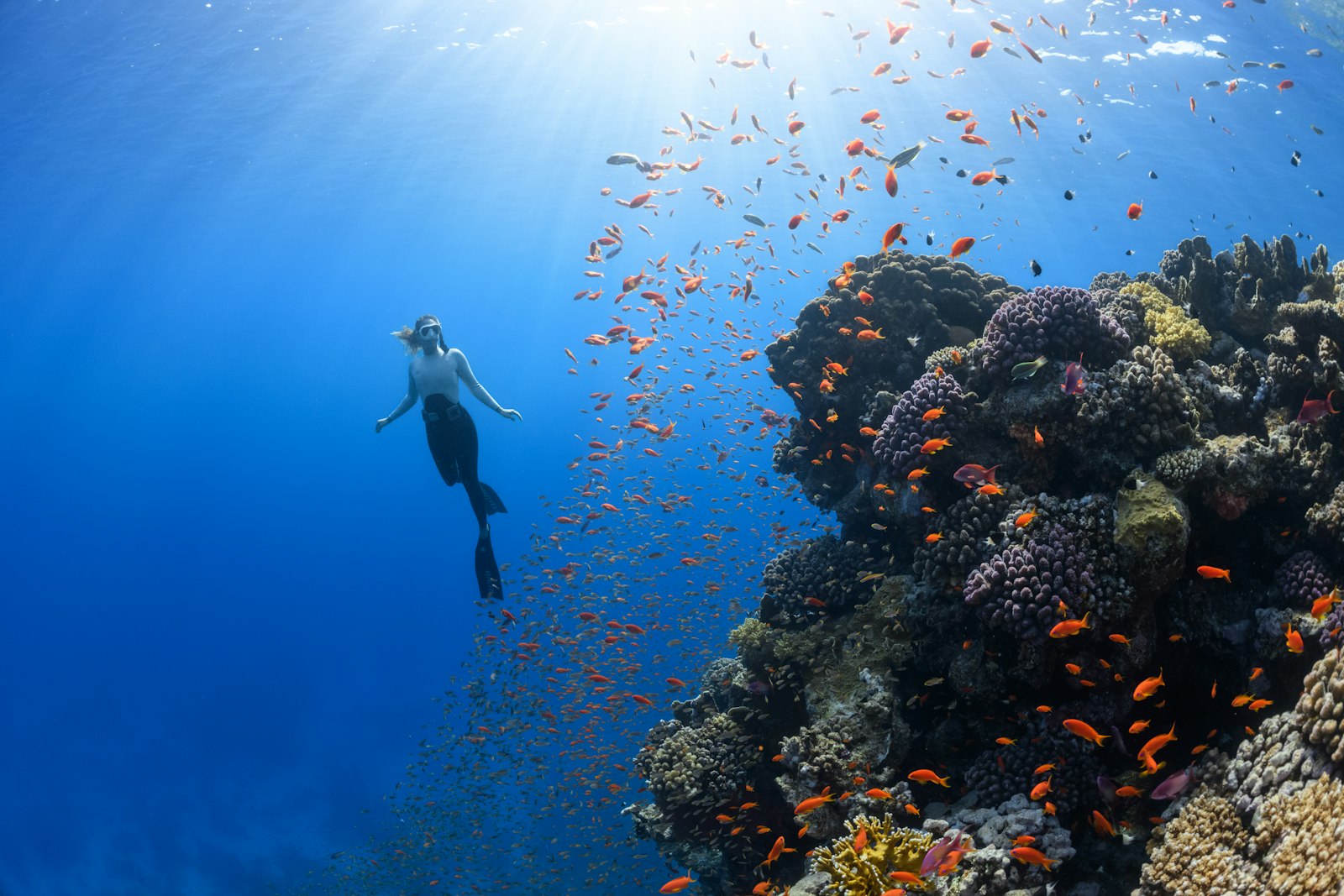
Coral reefs across East Nusa Tenggara, the province that includes both Riung and Komodo, are projected to face rising bleaching risk as sea temperatures climb — research led by University of Glasgow marine ecologist Laurence De Clippele, with WWF Indonesia and Indonesia’s Ministry of Maritime Affairs and Fisheries, flagged the wider Nusa Tenggara region as among the first in Indonesia likely to see annual severe bleaching starting around 2026. Riung-specific reef monitoring data is not publicly available, so this page reports the regional evidence honestly rather than inventing a local figure.
Forward-looking editorial view, not announced policy. Canonical figures: facts.md.
What does the research actually say?
A 2023-published study, reported by The Conversation and Earth Journalism Network and led by University of Glasgow researcher Laurence De Clippele in collaboration with WWF Indonesia and the Ministry of Maritime Affairs and Fisheries, modelled future bleaching risk across Indonesia’s marine protected areas. Its headline finding: more than half of Indonesia’s protected coral areas are projected to suffer severe bleaching annually by 2044 if current warming trends continue, with the Selat Pantar–Alor Marine Conservation Area in East Nusa Tenggara — the same province as Riung and Komodo — flagged as one of the earliest expected to face annual severe bleaching, starting around 2026. By 2030, the study projects 12 of Indonesia’s marine protected areas will face annual bleaching.
Separately, NOAA confirmed a fourth global coral bleaching event, and multiple sources reported bleaching activity across East Nusa Tenggara and other Indonesian regions during the November–December 2023 bleaching season. These are regional and global findings, not site-specific measurements of Riung’s own reefs — this site has not located a coral-health survey conducted specifically within the 17 Islands Marine Park.
Why regional data matters even without a Riung-specific study
Coral bleaching is driven primarily by sustained elevated sea-surface temperatures, a regional and global oceanographic phenomenon rather than a site-isolated one. A reef system’s exposure to bleaching risk correlates strongly with its location within a broader thermal-stress zone, which is why provincial and regional-scale studies (like the one above, covering East Nusa Tenggara) are a meaningful proxy for understanding pressure on Riung’s reefs, even without dedicated on-site monitoring. That said, local factors — depth, current, shading, species composition — can make specific reef patches more or less resilient than the regional average, which is exactly why a local survey would be more precise than this regional inference, and exactly why this page does not claim to know Riung’s specific bleaching status.
What this means for visitors right now
As of this page’s last update, this site has no evidence of a specific, documented mass bleaching event having occurred at Riung’s reefs. Snorkellers and divers currently visiting continue to report visually healthy-looking coral in trip accounts, though these are informal observations, not scientific surveys. The regional research above is a forward-looking risk projection (through 2026, 2030, and 2044) rather than a report of current reef death at Riung specifically — it’s a reason for informed concern and responsible-travel practice, not a reason to believe the reefs have already collapsed.
| Finding | Source | Scope |
|---|---|---|
| 50%+ of Indonesia’s protected coral areas may face annual severe bleaching by 2044 | De Clippele et al. (University of Glasgow, WWF Indonesia, KKP), reported by The Conversation, 2023 | National, Indonesia-wide |
| Selat Pantar-Alor (NTT province) flagged as facing annual severe bleaching from ~2026 | Same study | East Nusa Tenggara province (includes Riung/Komodo region) |
| Bleaching reported in NTT during Nov-Dec 2023 bleaching season | Multiple 2023-24 reports; NOAA confirmed 4th global bleaching event | Regional, East Nusa Tenggara |
| Site-specific bleaching survey of Riung’s own reefs | Not located by this site | Riung 17 Islands specifically |
Why bleaching risk projections vary by location within the same province
Bleaching risk isn’t uniform even within a single province — local factors like depth, current flow, and shading from surrounding landmass can make some reef patches more thermally resilient than others nearby, which is exactly why the cited study names a specific site (Selat Pantar-Alor) rather than declaring the whole of East Nusa Tenggara equally at risk. Riung’s reefs sit in a different micro-location within the same broader province, with their own depth and current profile that this site has not seen specifically modelled in the available research. This is precisely the gap between “regional risk is real and documented” and “we know exactly how it applies to this specific reef patch” that this page is trying to be honest about rather than paper over.
What would a Riung-specific study need to show?
A rigorous local assessment would need repeat-survey data over time — coral cover percentage, bleaching incidence by transect, water temperature logging — collected specifically within the 17 Islands Marine Park boundary, ideally by a research institution or NGO with reef-monitoring expertise. This site is not aware of such a study having been published for Riung specifically as of its last update; if one exists and comes to this site’s attention, this page will be revised to cite it directly rather than relying on the regional inference above.
What responsible visitors can do
Regardless of the precise local bleaching status, standard reef-safe practices reduce visitor impact: use reef-safe (non-oxybenzone) sunscreen, never touch or stand on coral, maintain fin control to avoid contact, and don’t take coral or shells as souvenirs. These practices matter more, not less, on reefs under regional climate pressure.
Frequently asked questions
Has coral bleaching been documented at Riung specifically?
This site has not located a coral-health survey or bleaching report conducted specifically within the 17 Islands Marine Park. Regional research covering East Nusa Tenggara province flags rising bleaching risk, but that is not the same as a site-specific finding for Riung.
Is Riung’s reef at risk from climate change?
Regional research (De Clippele et al., 2023) projects rising annual bleaching risk for marine protected areas across East Nusa Tenggara province, the region that includes Riung, starting around 2026. This is a projection based on sea-temperature trends, not a confirmed local bleaching event.
When did the most recent coral bleaching event affect Indonesia?
NOAA confirmed a fourth global coral bleaching event, with bleaching reported across multiple Indonesian regions including East Nusa Tenggara during the November-December 2023 bleaching season.
Should I still visit Riung’s reefs given climate change concerns?
Independent trip reports continue to describe Riung’s coral as visually healthy as of this page’s last update. Practising reef-safe habits (reef-safe sunscreen, no touching coral) helps limit visitor impact regardless of broader climate pressure.
Last updated: August 25, 2026
When considering the delicate state of Riung’s reefs and the pressures of climate change, choosing a responsible boat operator becomes paramount. A crew with local knowledge can navigate sensitive areas thoughtfully, ensuring minimal impact while still allowing appreciation of the marine park’s resilience. Operators offering scheduled group excursions or a premium private boat hire for the broader Flores region understand these environmental considerations.
How climate pressure intersects with practical trip planning
Regional projections for Indonesia coral reefs are abstract until you stand on a Riung jetty and see clear water and living coral below. This section connects that science to the decisions travellers actually make: which reefs to visit, how to move around Flores, what behaviour reduces your own impact, and how to interpret conflicting reports about whether Riung coral reefs are still in good condition.
If you are weighing Riung against other stops in the coral triangle Indonesia, it helps to separate three issues: long-term climate stress, short-term visibility and weather, and local human pressure. Those three rarely line up neatly, which is why honest expectations matter more here than chasing a single “best” reef.
For a broader sense of how Riung compares to Komodo’s sites in terms of fish life, coral cover and visibility, see this detailed comparison in Snorkelling Riung vs Komodo: Reefs, Turtles and Visibility. If you then decide Riung suits your pace and budget, the question becomes how to visit without adding unnecessary pressure to a warming reef system.
Does Riung actually sit inside the Coral Triangle, and what does that mean?
Yes, Riung lies within the recognised boundary of the Coral Triangle, so references to coral triangle Flores and Riung Nusa Tenggara timur are accurate. In practice, that means high overall coral and fish diversity by global standards, but not every reef patch is pristine. Some bommies show storm or anchor damage, while others, like a frequently visited Riung coral garden near Pulau Tiga, still present dense, mixed coral cover with good fish life when conditions are calm.
Is the coral in Riung 17 Islands Marine Park still healthy, or has it been damaged?
Visitor accounts and local guides still describe large areas that look visually healthy, but whether the coral in the 17 Islands Marine Park is still healthy or has been damaged has no single answer. You will see a mix: live branching and plate coral, patches broken by waves or careless fins, and some colonies stressed by heat. Climate trends suggest rising risk, but present-day snorkellers still report attractive, photogenic reefscapes at key sites.
Does Riung have good coral compared with other parts of Flores?
People often ask online, whether Riung has good coral compared with Labuan Bajo or Alor. The honest answer is that flagship Komodo sites typically deliver more dramatic walls and biomass, while Riung coral reef areas feel gentler but still rewarding, especially for newer snorkellers who value shallow, calm conditions. If you expect a quiet, small-town base with decent biodiversity instead of headline-grabbing big-fish action, Riung usually meets or exceeds expectations.
How can I snorkel without adding to local reef stress?
The single most effective behaviour is respecting coral reefs and not standing on coral in Riung 17 islands. Stay horizontal when you swim, keep fins away from the substrate, and use a properly fitted mask so you are not constantly adjusting near the reef. Choose reef-safe sunscreen or cover up with clothing, and avoid feeding fish. These habits matter more in warming seas, where every extra stressor reduces a colony’s margin for recovery.
What is the best season for seeing Riung coral reefs at their clearest?
Sea conditions matter more for your experience of Riung coral reefs than gradual climate trends. Dry season from April to November usually brings calmer seas; June to September is often the clearest, with fewer river run-off issues. During the wet season, stronger wind and rain can reduce visibility and make boat crossings choppy, though brief calm windows still occur. Checking a short-range marine forecast in Bajawa or Riung the day before helps avoid rough, silty days.
How does local conservation work relate to climate-driven bleaching?
Local initiatives cannot stop ocean warming, but they can improve a reef’s odds of coping with heat. Reduced destructive fishing, better anchoring practice and community patrols all buffer coral against additional damage. If you are interested in how neighbourhood groups, dive crews and NGOs are trying to keep Riung’s reefs resilient despite bleaching projections, see the overview in Community Conservation in Riung: Who Is Protecting the Reefs before you visit.
How do I get from Ende to Riung, and where to change in Mbay?
The change point is Mbay. From Ende you usually travel by bus or shared car via Mbay, where you may need to switch vehicles for the final stretch to Riung. Allow a full day, carry enough cash for fares and the small park retribusi, and check the latest transport notes in Cara ke Riung 17 Islands & Rincian Biaya.
Where can I check practical details again before I commit?
Because conditions and local practices evolve, it is sensible to confirm boat prices, park fees and conservation etiquette shortly before you travel. The main overview page, Riung 17 Islands: The Complete Guide to Flores Quietest Marine Park, and the linked FAQ collect current reports from recent visitors and operators so you can cross-check what you read here against the latest on-the-ground information.
Reading about bleaching projections is usually the point where independent planners decide whether to stop at Riung only, or to add a higher-intensity Komodo leg with careful reef use. If you prefer to hand logistics to a professional crew after Flores overland buses, you can compare a tailored private boat charter, a shared or private Komodo sailing trip, or even a wider luxury cruise Indonesia that links several reef systems.
Keep reading
Travel Journal 11 min
Birdwatching Around Riung and Its Mangroves
Riung Flores › 17 Islands Marine Park: What to Know › Birdwatching Around Riung Flores is one of Wallacea's most…
Travel Journal 14 min
Marine Life at Riung 17 Islands: What You Actually See
Riung's 17 Islands Marine Park protects 183 documented coral species and 306 reef fish species, alongside dugong, dolphins, sea turtles…
Travel Journal 9 min
Travel Trends 2027 Affecting Riung Flores
As we approach 2027, travel trends in Riung Flores are shifting towards sustainable tourism, digital engagement, and personalized travel experiences,…