Community Conservation in Riung: Who Is Protecting the Reefs
Riung Flores Editorial Desk 11 min read
Riung’s marine park is managed by BBKSDA NTT, and collaborative patrols with community partners under the national Masyarakat Mitra Polhut (MMP) scheme are standard practice in Indonesian conservation areas — but no accessible source names a specific patrol committee for Riung, so this site names none. What is separately documented is a nationally funded mangrove replanting program at Desa Langkosambi Timur, within Kecamatan Riung. This page covers what is actually documented about community-based conservation here — not a general “protecting paradise” narrative, but the specific, named programs and the gaps between them.
Forward-looking editorial view, not announced policy. Canonical figures: facts.md.
Who manages and patrols the marine park — and what we can actually verify
The management authority is not in doubt: Balai Besar KSDA Nusa Tenggara Timur administers TWA/TWAL Tujuh Belas Pulau under the collective designation decree SK No. 3911/MENHUT-VII/KUH/2014. What we could not verify is the composition of any named patrol committee for Riung. Joint patrolling involving community partners is a real, nationally defined mechanism in Indonesian conservation areas, but we found no accessible source that names such a body here, so this page names none. The table below separates what is verifiable from what is not:
| Claim | Status of the evidence |
|---|---|
| BBKSDA NTT is the managing authority for TWA/TWAL Tujuh Belas Pulau | Verified — collective designation decree SK No. 3911/MENHUT-VII/KUH/2014 (14 May 2014) |
| Masyarakat Mitra Polhut (MMP) exists as a national scheme placing community members alongside forest rangers | Verified — a standing KSDAE programme used across Indonesian conservation areas, not specific to Riung |
| Fishing groups and tour-boat operators are active in Riung and use the same waters | Verified — they appear throughout local reporting and in the 2018 resource-use inventory below |
| Increased patrols involving local fishers were formally recommended for this park | Verified — recommendation recorded in the 2018 BBKSDA NTT traditional-use-zone inventory |
| A named, standing patrol committee for Riung, with a published membership roster | Not verified — no accessible source names one; this site therefore names none |
| A dated report confirming such a committee was active in 2026 | Not verified — the page that would carry it is not reachable, and no substitute source was found |
| A named Pokmaswas (community surveillance group) for Riung | Not verified — common elsewhere in Indonesian marine conservation, not located here |
Read that table as the honest state of the evidence rather than as a gap in the park’s management. Enforcement in a marine tourism area of this size depends on patrol fuel, boat availability and weather as much as on paperwork, and none of those are published figures. Where this page can point to a dated, named, independently reported programme — the mangrove work below — it does so; where it cannot, it says so instead of assembling a plausible-sounding structure from partial material.
Mangrove replanting: a national program that reached Riung
Indonesia’s national Padat Karya Penanaman Mangrove (PKPM) program, run under the post-COVID Pemulihan Ekonomi Nasional (PEN) economic-recovery scheme, included a documented planting site at Desa Langkosambi Timur, Kecamatan Riung — 50 hectares of enrichment planting at roughly 1,000 trees per hectare, reported via Balai Pengelolaan DAS dan Hutan Lindung Benain Noelmina and covered by Mongabay Indonesia in December 2020, timed to a visit by the then-Deputy Minister of Environment and Forestry to Ngada and the 17 Islands park. NTT-wide, this program involved 56 community groups and 2,078 people across 17 regencies; the specific community group name for the Langkosambi Timur site itself was not published in the source we found. This is a real, dated, sourced program — but it is a national scheme applied locally, not a Riung-founded initiative, and we have not found evidence of it continuing as an ongoing annual program at this specific site beyond the reported 2020 activity.
NGO presence: Komodo Survival Program
The Komodo Survival Program (KSP), an NGO focused primarily on Komodo dragon conservation, documents its own community-awareness work as covering “Wae Wuul nature reserve, the three contiguous conservation areas of Wolo Tadho, Riung and Tujuh Belas Pulau.” This confirms an NGO conservation presence that explicitly includes Riung’s marine park area, though the publicly available material does not name specific Riung-based local groups or detail specific project activities beyond general community awareness work.
What is documented as a threat, and what communities are asked to do about it
A 2018 BBKSDA NTT inventory of community resource use in the park’s traditional-use zone flagged destructive fishing methods — specifically compressor fishing and the use of chemical anesthetics — as damaging coral and water quality, and recommended increased patrols involving local fishers plus third-party (tourism operator/NGO) support for community-based ecotourism programs, particularly for seaweed farmers around Pulau Ontoloe and Kelurahan Nangamese. Whether those specific 2018 recommendations have since been implemented as named, ongoing programs is not something we can confirm from the sources available to us, and we found no dated source recording the outcome either way. Treat the recommendation as documented and its follow-through as unverified.
What we are not going to claim
We have not found a documented, named Pokmaswas (community surveillance group) specifically for Riung/TWAL Tujuh Belas Pulau, despite this being a common model elsewhere in Indonesian marine conservation — if one exists under a different name, we have not located it in current, dated sources. We have also not found a documented, ongoing coral restoration or transplant project specifically for Riung’s reefs, distinct from the general scientific coral-condition surveys conducted here by university researchers. If you are researching this topic further for a school project, thesis, or grant proposal, treat these two gaps as open questions rather than assuming a program exists simply because similar programs exist in comparable Indonesian marine parks.
How this connects to your visit
Community-based conservation here is inseparable from the same fishermen and boat operators who run the Riung 17 Islands boat tours — see our boat tour guide — because those are the people on the water every day, whatever formal structure does or does not sit above them. Responsible reef etiquette (no touching coral, no anchoring directly on reef, packing out your own trash) supports the same conservation goals these community groups are formally tasked with protecting.
Frequently asked questions
Is there a named community patrol group specifically for Riung’s marine park?
Not one this site can verify. BBKSDA NTT manages the area, and collaborative patrols with community partners under the national Masyarakat Mitra Polhut scheme are standard practice in Indonesian conservation areas, but no accessible source names a specific patrol committee for Riung, so this site names none.
Has mangrove replanting happened in Riung?
Yes — a national Padat Karya Penanaman Mangrove program reported 50 hectares of mangrove enrichment planting in Desa Langkosambi Timur, Kecamatan Riung, documented by Mongabay Indonesia in December 2020.
Is there an active coral restoration project at Riung 17 Islands?
We have not found documentation of a named, ongoing coral restoration or transplant project specific to Riung. University research teams have conducted coral-condition surveys in the area, which is a different kind of activity from active restoration.
Understanding Riung’s community conservation efforts often leads to questions about how to visit the 17 Islands with minimal impact. Beyond local boat hires, some visitors opt for the structured approach of a dedicated charter. Komodo Luxury offers organised day trips suitable for exploring Flores, often using their Komodo Signature vessel. A liveaboard sailing trip is another alternative for a more comprehensive regional tour.
How much protection do Riung’s reefs really get in practice?
Riung Flores marine conservation is built more on enforcement and zoning than on glossy NGO projects. Its protected status gives Taman Wisata Alam Laut 17 Pulau Riung the legal backbone of an Indonesia marine conservation area, but day-to-day results still depend heavily on fuel budgets, weather, and how seriously crews and visitors take the rules once they are away from the pier.
If you want a sense of what is actually forbidden, tolerated, or simply not enforced yet, read the zoning overview in Riung 17 Islands Conservation: Reef Health, Zoning and Rules before you book a boat. It explains where fishing is still allowed by local boats and which bays are meant to stay quiet, even if your skipper suggests otherwise.
Riung’s reefs are also living through the same warming seas and bleaching episodes as the rest of NTT. Enforcement cannot change sea temperatures, so long-term protection here is as much about climate resilience and sediment control as it is about catching a blast-fishing crew. The wider climate context is unpacked in Coral Bleaching and Climate Pressure on Riung Reefs, which helps explain why some shallow patches now look patchier than older guidebooks suggest.
Are specific islands like Kolong, Bampa or Meja treated differently for conservation?
Kolong, Bampa (also written Tembang or Tampa) and Meja are not separate legal entities. They sit within the same overall marine-tourism area, but skippers and guides often treat individual bays as either “snorkel-first” or “picnic-first” stops. If you want quieter water, ask your crew to avoid lunch peaks at the more popular sand spits.
Do lesser-known islets like Wire, Dua or Taor get any patrol attention?
The outlying clusters around Wire, Dua and Taor see fewer tourist boats, but they are still covered when patrol fuel and sea conditions allow. In practice, these quieter corners rely more on local fishermen self-policing destructive gear than on constant official presence, so visitor reporting of problems matters.
What about Halima, Lainjawa or Patta – are they open for regular visitors?
Halima, Lainjawa and Patta are small islands and reefs that local crews know well, but not every skipper will take first-time visitors there. Access depends on swell and wind; some spots are exposed and only comfortable in the calmest June–September window. Ask clearly if your charter price covers the extra fuel for longer runs.
Can I ask to visit Pau, Sui, Tembaga or Wire for snorkelling?
Yes, within reason. Pau, Sui, Tembaga and Wire are part of the same park, not private concessions. Coral condition varies by slope and current, so use recent local knowledge rather than old blog posts to decide which of these is worth your limited boat time.
Is there any research or monitoring happening beyond patrol work?
University teams have periodically surveyed coral cover and fish biomass, but these are short research visits rather than permanent field stations. You will not see a visitor centre or ranger lab on the islands. For a broader picture of reef condition and species lists compiled from those studies, see Preserving the Marine Biodiversity of Riung 17 Islands, which consolidates what has actually been published.
How much of this depends on the behaviour of tour boats and guides?
A lot. Anchoring on sand, not reef, and refusing to chase turtles or block flying fox flight paths at dusk are all down to skipper choices. Guides who know the rules rotate sites so that popular spots such as Meja and Kolong get breathing space. If your crew suggests feeding fish or dropping anchor on coral, you are the last line of defence to say no.
Does visiting help or hurt conservation in Riung?
Done carefully, visits support the argument that this low-key Indonesia marine conservation area still has economic value without resorting to intensive fishing. Boat income, homestay fees and the small retribusi entry fee all reinforce that logic. The damage comes from careless anchoring, trash and wildlife disturbance, not from your mere presence, so low-impact choices on the day matter more than how you label the trip.
If you are reading about who actually protects Riung’s reefs, you are already past the “maybe” stage and into real planning: once you know your dates and budget, it is usually time to move from theory to a specific boat, whether a local Riung charter or a Labuan Bajo-based speedboat charter, a relaxed Komodo sailing trip or a focused one-day trip package.
Keep reading
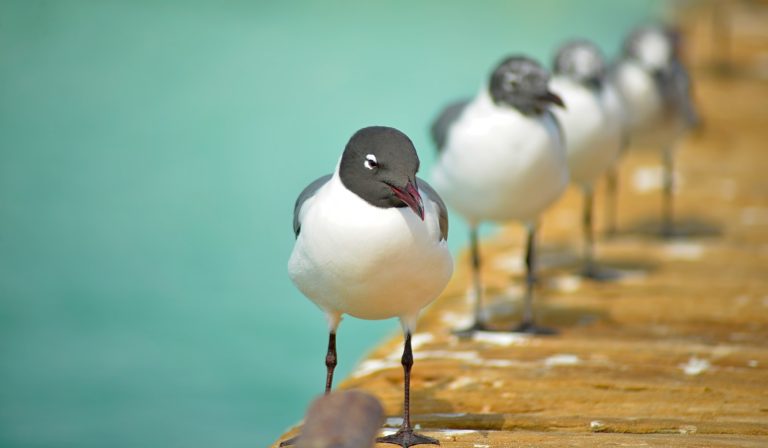
Travel Journal 11 min
Birdwatching Around Riung and Its Mangroves
Riung Flores › 17 Islands Marine Park: What to Know › Birdwatching Around Riung Flores is one of Wallacea's most…
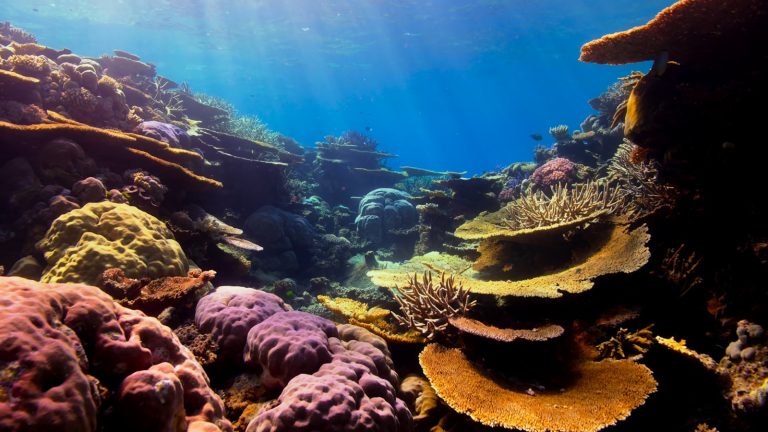
Travel Journal 14 min
Marine Life at Riung 17 Islands: What You Actually See
Riung's 17 Islands Marine Park protects 183 documented coral species and 306 reef fish species, alongside dugong, dolphins, sea turtles…
Travel Journal 9 min
Travel Trends 2027 Affecting Riung Flores
As we approach 2027, travel trends in Riung Flores are shifting towards sustainable tourism, digital engagement, and personalized travel experiences,…