Riung’s Culture: Ethnic Groups, Language and Daily Life
Riung Flores Editorial Desk 13 min read
Riung has its own distinct language and ethnolinguistic identity, separate from the better-known Ngada highland culture centred on Bajawa, with an estimated 27,000 Riung speakers and a coastal, fishing-based way of life shaped by the sea rather than the volcanic highlands further inland.
Forward-looking editorial view, not announced policy. Canonical figures: facts.md.
Riung Is Not Ngada Culture, Even Though They Share a Regency
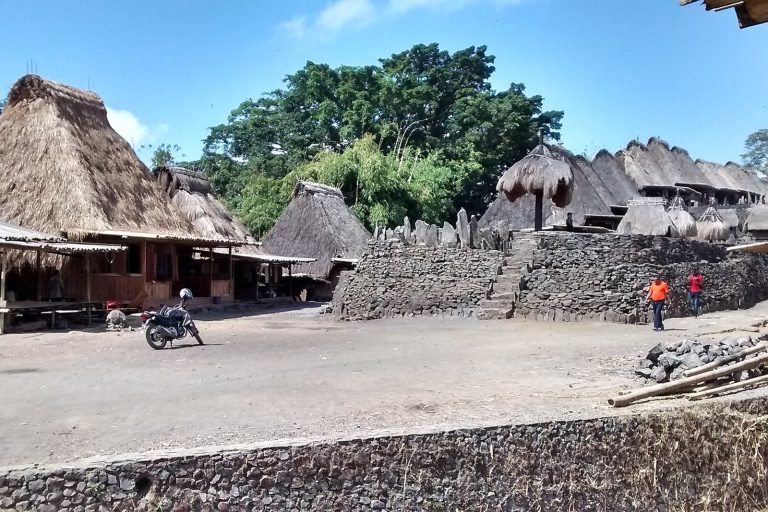
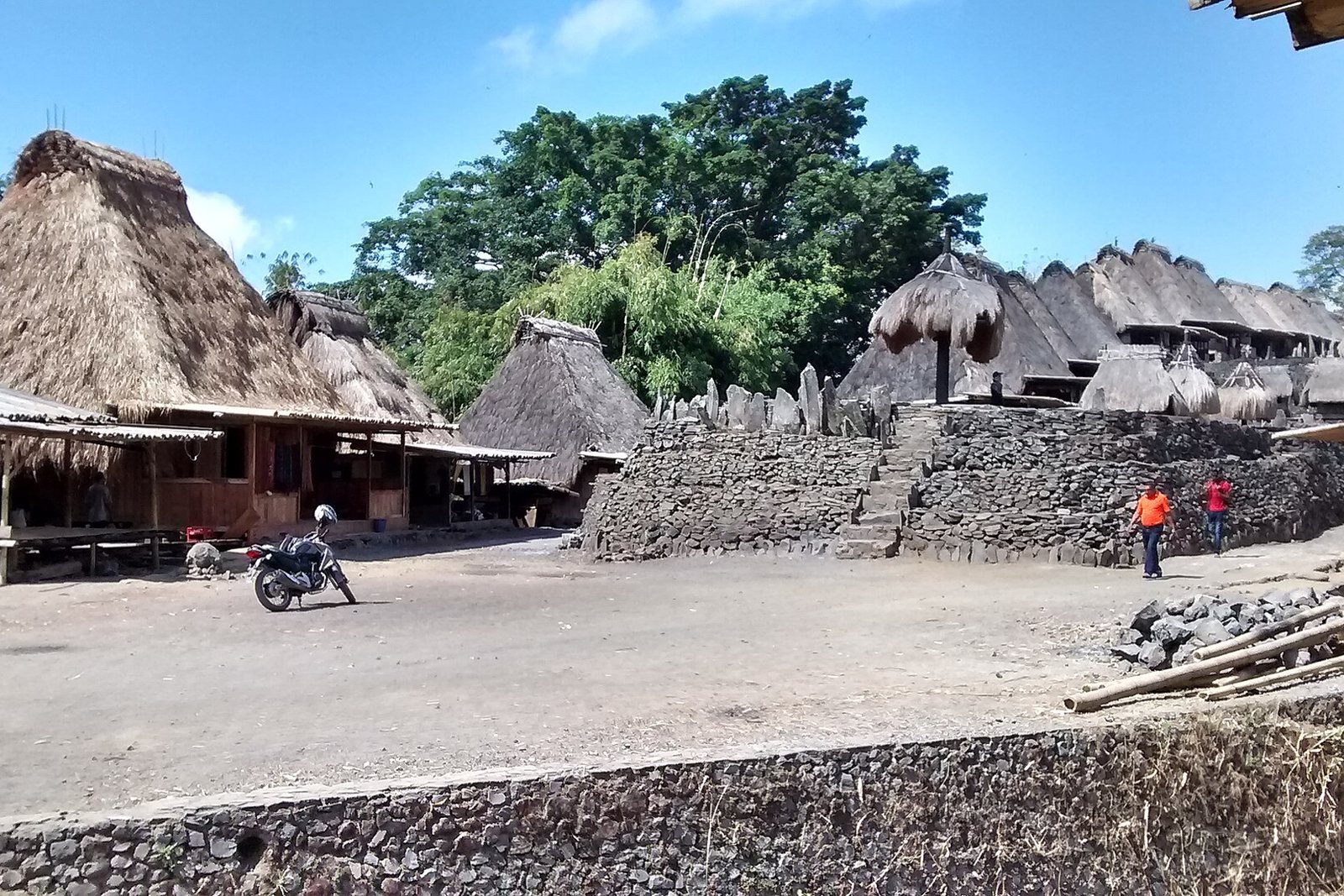
Travellers moving through Ngada Regency often assume the region’s culture is uniform, associating it entirely with Bajawa’s well-documented Ngada traditions — the distinctive conical thatched houses, the megalithic village compounds of Bena and Luba. Riung, on the coast, is linguistically and culturally distinct from this highland Ngada identity. The Riung language is documented separately in linguistic literature, and while it has historically been classified in some sources as a dialect related to Manggarai (spoken further west on Flores), it is described as only marginally intelligible with Manggarai — meaning speakers of one generally cannot easily understand the other, a meaningful linguistic distance rather than a close dialect relationship.
The Size of the Riung-Speaking Community
Non-government ethnolinguistic estimates place the Riung-speaking population at roughly 27,000 — a figure that describes the language community rather than the administrative sub-district’s population, since Riung speakers extend into areas beyond Kecamatan Riung’s official boundary. This is a meaningfully sized but still minority language even within Flores, itself home to a dense patchwork of distinct local languages across a relatively small island — a pattern typical of eastern Indonesia’s linguistic diversity.
A Coastal, Fishing-Based Way of Life
Where Bajawa’s Ngada culture is shaped by highland agriculture and volcanic-soil farming, Riung’s daily life has historically centred on the sea: fishing, small-scale boat building and maintenance, and — in recent decades — a growing tourism economy built around the 17 Islands Marine Park. This coastal orientation shows up in practical, visible ways for visitors: the town’s rhythm follows boat departures and the fish market rather than an agricultural calendar, and the local diet leans heavily on fresh fish and coastal produce rather than the highland staples more associated with Bajawa’s surrounding villages.
Religion and Daily Practice
As across most of Flores, Catholicism is the predominant religion in the Riung area, a legacy of Portuguese and later Dutch colonial-era missionary activity across the eastern Lesser Sunda Islands, generally blended in practice with older local customary (adat) beliefs and observances rather than existing as a wholly separate tradition. This blended pattern — formal Catholic practice alongside customary ritual and social structure — is common throughout Flores rather than unique to Riung, though the specific adat practices and social structures in the Riung area reflect its own distinct ethnolinguistic community rather than being identical to Ngada or Manggarai customary practice.
What This Means for Visitors
Practically, this means a few things worth knowing before you arrive: greetings and basic courtesy phrases in Indonesian (rather than assuming a Ngada-highland phrase will be understood) are the reliable default in Riung town; modest dress is appreciated when visiting any village area away from the immediate tourist boat-and-homestay zone; and asking permission before photographing people, especially at the local market or in a fishing context, is good practice regardless of destination but particularly relevant in a small community where tourism is still a relatively recent and modest part of the local economy compared to somewhere like Labuan Bajo.
Etiquette Around the Flying-Fox Colony and Local Fishing
Because the 17 Islands Marine Park includes a designated traditional-use zone where local fishing continues alongside tourist boat access, visitors will regularly share park waters with local fishing boats — this is a normal, documented part of how the park balances conservation with the livelihoods of the coastal villages inside its boundary, not something to be surprised by or to interfere with. See the conservation and zoning guide for how this traditional-use arrangement works.
Boat-Building and Fishing Craft Knowledge
Small-scale wooden boat building and maintenance is a practical, living skill in Riung rather than a museum craft, since these are the same boats that make up the local fishing fleet and the tourist charter fleet visitors book for 17 Islands trips. Captains and boat owners typically maintain their own vessels, and boat repair happens visibly around the town’s small harbour rather than at a dedicated marina facility — a detail that, for travellers interested in it, offers a more grounded look at the local economy than the boat trip itself usually provides.
How Riung Compares to Manggarai Culture Around Labuan Bajo
Travellers who visit both Riung and Labuan Bajo on the same Flores trip are moving through two more distinct cultural areas than the shared “Flores” label suggests. Labuan Bajo and the wider Komodo-adjacent region fall within Manggarai cultural territory, with its own language and customary practices distinct from both Riung and Ngada. Practically, this means the “local culture” experience differs meaningfully depending on which part of Flores you’re in at the time — Riung’s coastal, fishing-oriented daily life is a genuinely different texture from Manggarai’s culture around Labuan Bajo, not simply the same regional identity at a different location.
Traditional Ceremonies and Customary Life
As with much of Flores, customary (adat) ceremonies around key life events — marriage, harvest, and community occasions — remain part of local life in the Riung area, generally coexisting with formal Catholic religious practice rather than sitting apart from it. These ceremonies are typically internal community events rather than staged tourist performances, which is part of what distinguishes Riung’s cultural presentation from more tourism-developed parts of Indonesia: what you observe of local life here tends to be lived rather than performed for visitors. Travellers should not expect, or request, access to private customary ceremonies as a tourist activity, and should treat any incidental exposure to community life with the same respect they’d extend to any private occasion.
Why Cultural Accuracy Matters for This Page
Riung’s specific ethnolinguistic identity is genuinely under-documented in English-language travel content, where “Flores culture” is frequently flattened into a single generic description that doesn’t distinguish Riung from Ngada, Manggarai, or the island’s several other distinct groups. Getting this distinction right matters beyond academic accuracy — understanding that you’re entering a specific, distinct cultural area rather than a generic “Flores village” shapes how respectfully and accurately a visitor engages with the place, which is the actual point of a culture page like this one rather than simply a curiosity.
Learning a Few Words Before You Arrive
Even a handful of basic Indonesian phrases — greetings, thank you, numbers for negotiating boat prices — go further in Riung than in more internationally trafficked parts of Indonesia, simply because fewer visitors here make the effort, and locals tend to notice and appreciate it. This matters more practically than it might in Labuan Bajo or Bali, where English is far more commonly spoken by default; in Riung, Indonesian remains the genuinely useful common language for most everyday interactions.
Frequently Asked Questions
Is Riung’s culture the same as the Ngada culture around Bajawa?
No, Riung has its own distinct language and coastal cultural identity, separate from the highland Ngada culture centred on Bajawa, despite both falling within the same regency.
What language do people in Riung speak?
Riung has its own documented language, historically classified by some sources as related to Manggarai but only marginally mutually intelligible with it. Indonesian is the practical common language for visitors.
What religion is practised in Riung?
Catholicism predominates, as across most of Flores, generally practised alongside older customary (adat) beliefs rather than as a wholly separate tradition.
Is it okay to photograph people at the Riung market or on fishing boats?
Ask first, as you would anywhere. It’s straightforward courtesy that’s particularly relevant in a small community where tourism is still a modest part of daily life.
How many people speak the Riung language?
Non-government ethnolinguistic estimates place the Riung-speaking population at roughly 27,000, extending beyond the administrative sub-district boundary.
Terakhir diperbarui: 25 Agustus 2026.
Continue Exploring
See the Riung village guide for where this culture is most visible day to day, and the conservation guide for how local fishing rights fit into the marine park’s zoning.
Understanding Riung’s cultural fabric often deepens when exploring the surrounding environment, including its distinct islands and marine life. While land-based experiences reveal much, access to the more remote aspects requires a boat and knowledgeable crew. Komodo Luxury provides guided marine tours and multi-day sailing trips across Flores, which can include the Riung archipelago. Browse their vessel selection for further planning.
Practical Details Around Riung Local Culture
Understanding how Riung local culture works in practice makes it easier to move respectfully through town and the islands. Daily life is quieter and more work-focused than many visitors expect, centred on boats, tides and family routines rather than staged performances, yet small encounters add up to a clear sense of place if you give them time.
The town’s role as a small Riung fishing town shapes how shops open, how people dress and where conversations happen. For most visitors, the clearest window onto Riung village local culture and daily life of fishermen communities is the waterfront at first light, the afternoon return of boats, and the Sunday flow to church, rather than any single “cultural show”.
If you are combining marine time with remote work or a longer stay, the picture shifts again: routines around power cuts, mobile data strength and where people actually gather at night are as much a part of culture as language or religion. Longer-stay guests often find that learning a handful of local words opens more doors than any planned excursion.
What is the local language spoken in Riung besides Indonesian?
Locally, people simply call it “Riung”, so “bahasa Riung” is the answer you will usually hear. Most adults are bilingual in Riung and Indonesian, and some also speak neighbouring languages such as Ngada or Manggarai, especially traders and teachers. Using a few Riung greetings, even if the conversation then continues in Indonesian, is appreciated.
Can I rely on Google Maps navigation accuracy for roads to Riung Flores?
Google Maps navigation accuracy for roads to Riung is mixed. Distances and the main Bajawa–Riung and Mbay–Riung routes are broadly correct, but estimated times are optimistic and side roads to beaches, viewpoints and villages are sometimes misaligned. Assume slower speeds, ask guesthouses or drivers about current roadworks, and double-check any shortcut that appears to cut across unpaved or seasonal tracks before committing.
Can I see traditional Ngada culture if I am based in Riung?
Yes, but not in Riung itself. If you are hoping to see traditional Ngada culture from a base in Riung, you will need at least a day-trip inland to Bajawa-area villages such as Bena or Luba. The drive is 3.5–6 hours each way by public bus, or 2.5–3 hours by private car, so many visitors overnight in Bajawa instead, treating Riung and highland Ngada as two different stays.
Where is the last reliable fuel stop before the coast road to Riung?
On the main route, the last dependable pump is usually in or just after Bajawa town, and again around Mbay if you come from Ende. Smaller pumps closer to Riung can run dry or close early. If you rent a motorbike, fill up fully in Bajawa, top up whenever you see a reliable station, and do not expect 24-hour fuel once you leave the highlands.
Is photographing traditional boats in Riung harbor at sunrise acceptable?
Locals are generally relaxed about photographing traditional boats in Riung harbor at sunrise, as long as the focus is on boats and light, not close-ups of individuals working without consent. If you want portraits of crew or fish sellers, ask with a smile and a simple “boleh foto?”. Avoid obstructing ramps or nets, and keep tripods clear of the narrow concrete edges and mooring lines.
Where is Riung village local culture and daily life of fishermen communities most visible?
Look around the harbour, fish market and nearby kampung lanes rather than the main through-road. Early morning fish landings, net-mending in the shade and children walking to school show Riung village local culture and daily life of fishermen communities more accurately than any arranged demonstration. Walking slowly, greeting people, and buying small items like coffee or snacks creates low-key, reciprocal contact rather than one-sided observation.
How does Riung fit into wider Ngada Regency tourism?
Within Ngada regency tourism, Riung is the coastal counterpoint to Bajawa’s highland culture and hot springs. It draws fewer organised tours, partly due to road time and the lack of a national online booking system for boats. Independent travellers use Riung as a quieter base for snorkelling and island picnics, then continue overland to Bajawa, Ende or Ruteng. For cost breakdowns, see this guide to sharing boat trips to the 17 Islands.
How can longer stays in Riung work with remote routines?
Longer stays make it easier to notice slower rhythms of Riung local culture: weekly markets, church events, school ceremonies and the way boat crews prepare gear the evening before trips. If you are mixing work and travel, this overview of digital nomad life in Riung covers mobile data, power and where people actually gather after dark. For broader planning, the main Riung 17 Islands guide pulls together transport and marine park details.
For travellers who come for culture first and sea second, there is a point where planning Riung local culture experiences independently shifts into needing a reliable boat crew or a Komodo leg. Once you are pricing charters or linking Riung with Komodo, compare a flexible Komodo boat tour, scheduled open trip departures, or a longer Komodo sailing trip that can be timed either side of your overland Flores segment.
Keep reading
Travel Journal 11 min
Birdwatching Around Riung and Its Mangroves
Riung Flores › 17 Islands Marine Park: What to Know › Birdwatching Around Riung Flores is one of Wallacea's most…
Travel Journal 14 min
Marine Life at Riung 17 Islands: What You Actually See
Riung's 17 Islands Marine Park protects 183 documented coral species and 306 reef fish species, alongside dugong, dolphins, sea turtles…
Travel Journal 9 min
Travel Trends 2027 Affecting Riung Flores
As we approach 2027, travel trends in Riung Flores are shifting towards sustainable tourism, digital engagement, and personalized travel experiences,…