Riung 17 Islands vs Komodo: Which Is Better for You?
Riung Flores Editorial Desk 17 min read
- Choose Komodo for its UNESCO-listed prehistoric wildlife, challenging treks, and luxury liveaboard options.
- Opt for Riung if you prioritize pristine snorkeling, empty beaches, and authentic local encounters over brand-name recognition.
- Factor in Logistics: Komodo is easily accessible via Labuan Bajo’s airport, whereas Riung requires a multi-hour overland journey, filtering out the crowds.
Riung and Komodo National Park sit at opposite ends of Flores, roughly 340 km apart by road, and they are not variations on one another. Komodo is a national park with a statutory tariff, a daily visitor cap and an airport at its gateway. Riung is a marine nature park (Taman Wisata Alam Laut) administered by BBKSDA NTT, reached overland, with a small local retribusi collected at the pier and no scheduled boat product beyond what the harbour arranges on the day. This comparison sets the two side by side on the things that actually differ: fees, access, crowds, what you see in the water, and what a day costs.
The Lay of the Land: Geography and Accessibility
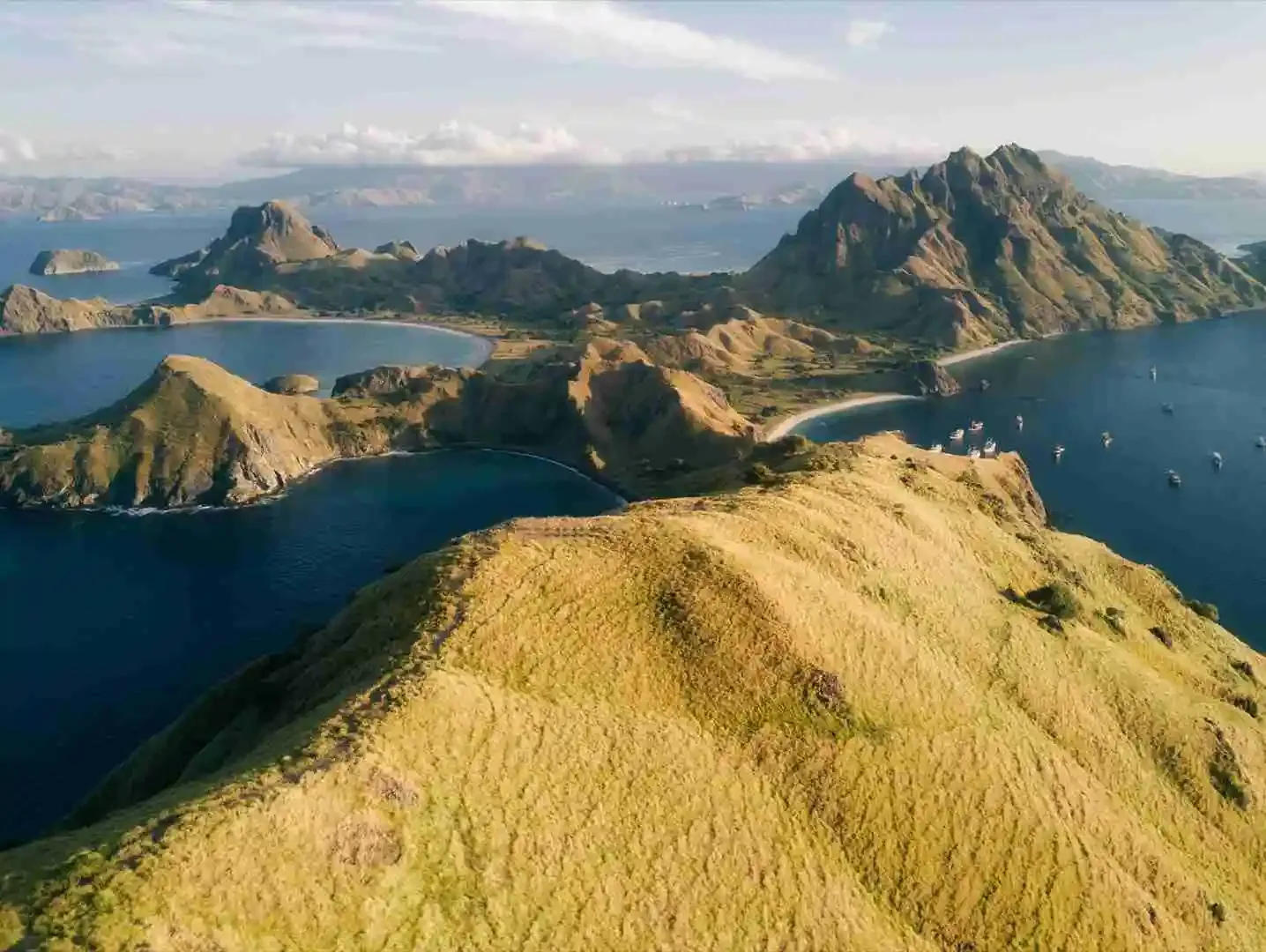
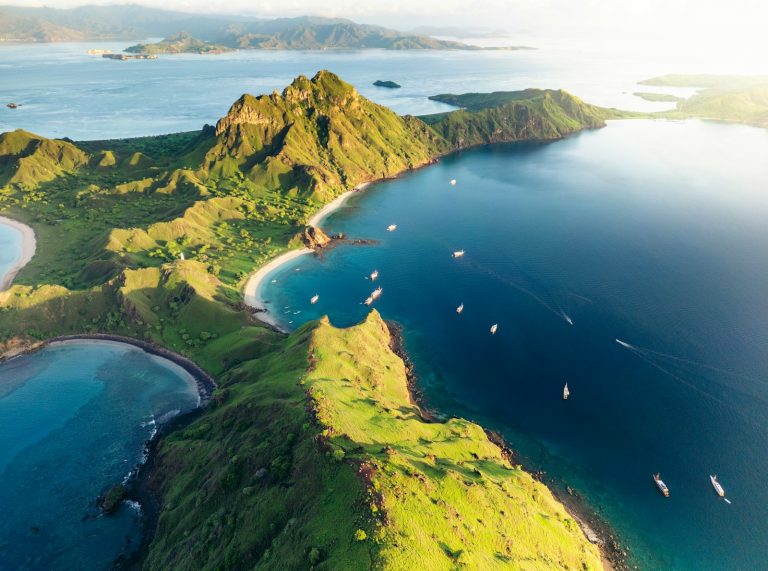
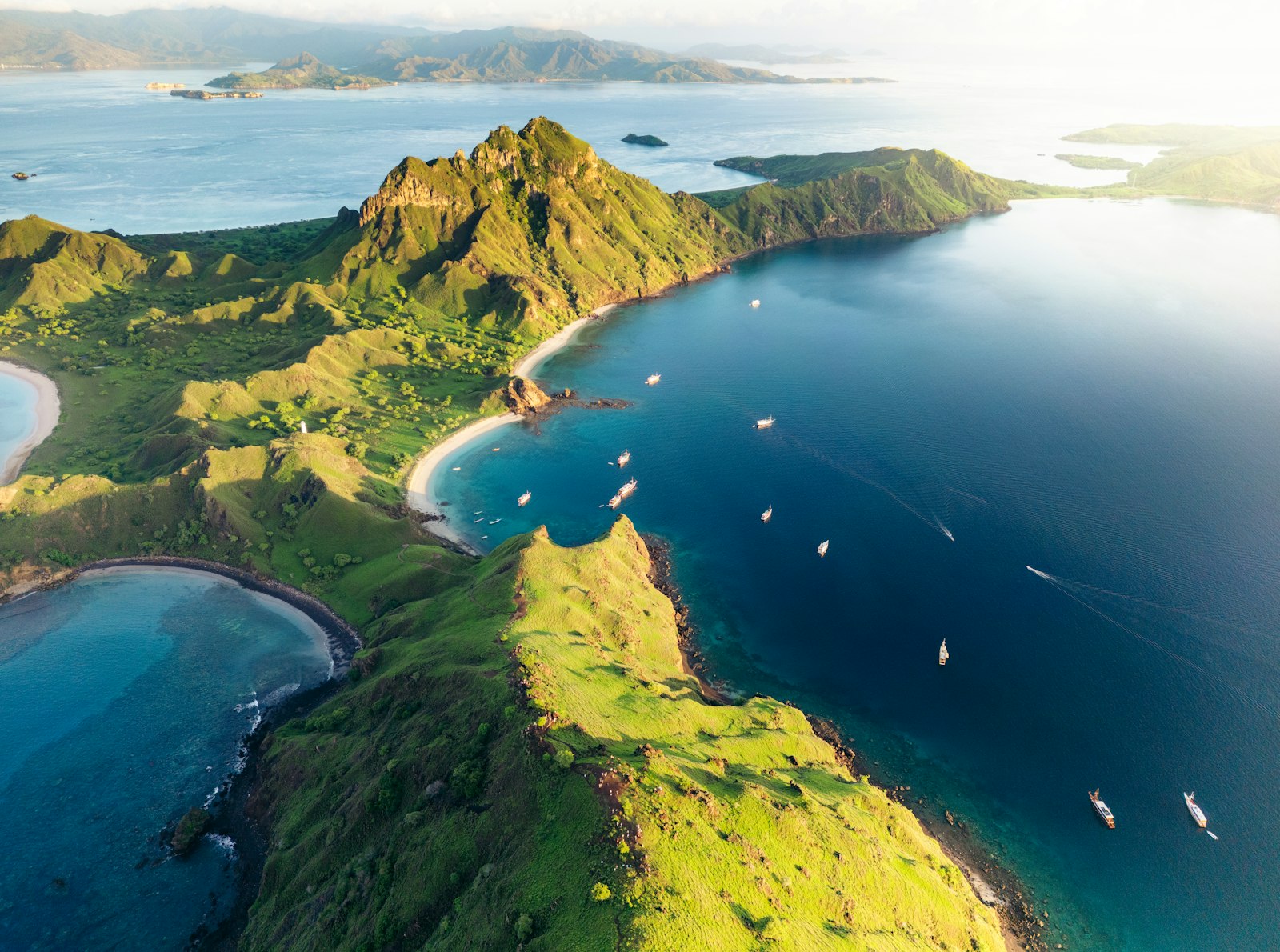
The fundamental difference between these two destinations begins with a map. Komodo National Park is a globally recognized titan, a UNESCO World Heritage site since 1991 that sprawls across roughly 1,733 square kilometres (about 173,000 hectares) of land and sea, with larger figures in circulation depending on which marine buffer boundary is used. Its gateway is Labuan Bajo, a once-sleepy fishing village on the western tip of Flores that has exploded into a busy tourism hub. Komodo Airport (LBJ) receives multiple daily flights from Bali and Jakarta, making access remarkably straightforward. From the harbor, a fleet of hundreds of vessels, from budget backpacker boats to multi-million-dollar private yachts, sets sail for the park. The journey to the main islands of Rinca or Padar takes approximately two to three hours, a well-trodden path on the global adventure circuit. This infrastructure is both a blessing and a curse; it provides comfort and convenience but ensures you will share the experience.
Riung, by contrast, remains a study in remoteness. The 17 Islands Marine Nature Park (Taman Wisata Alam Laut 17 Pulau Riung) is tucked away on the northern coast of Flores, a considerable distance from any major airport. Reaching it requires commitment. The most common route is an overland drive of 70–75 kilometres from the central highland town of Bajawa, a journey that takes a winding, bumpy 2.5 to 3 hours by private car, or 3.5 to 6 hours on the one daily public bus. The alternative is a similar drive from Ende (ENE). This overland trek acts as a natural filter, preserving Riung’s tranquility. There are no luxury resorts here, no busy marinas. The town is a simple, functional port with a handful of guesthouses. As set out in the Riung Flores guide, this journey is part of the destination’s intrinsic appeal, shedding the casual tourists and rewarding those who seek what lies beyond the easy route.
The Main Attraction: Iconic Dragons vs. A Marine Cornucopia
In Komodo, the marquee star is undeniably the Komodo dragon (Varanus komodoensis). Seeing this three-meter-long, 70-kilogram predator in its natural habitat is a primal experience. Guided by a park ranger armed with a forked stick, you trek across the arid, savanna-like landscapes of Rinca or Komodo Island, your senses on high alert. The dragons are often found lazing near the ranger station, but the real thrill is spotting one on the move along a dusty trail. The park is more than just its famous lizards; it’s a critical conservation area for Timor deer, water buffalo, wild boar, and over 150 species of birds. The experience is terrestrial, visceral, and tightly controlled for safety. It’s a wildlife encounter that feels ripped from the pages of a natural history epic.
Riung’s allure is more subtle and aquatic. While it lacks a single, globally famous creature, its signature spectacle is the daily exodus of thousands of giant fruit bats, or flying foxes, from Ontoloe Island. At sunset, the sky darkens with a river of leathery wings as the bats head to the mainland to feed—a striking, almost supernatural event. But the true treasure lies beneath the water’s surface. The reefs are widely described in survey literature and independent trip reports as being in good condition for the region, which is generally attributed to low tourism pressure and limited destructive fishing. Government and academic surveys of the park document 183 coral species and 306 reef fish species inside its waters. Snorkeling off Pulau Tiga or Pulau Rutong reveals kaleidoscopic gardens of hard and soft corals teeming with angelfish, butterflyfish, and schools of fusiliers. It’s not about one big sighting; it’s about immersion in a thriving, complete ecosystem.
The On-the-Ground Experience: Crowds, Comfort, and Authenticity
Your experience on the ground in Komodo is dictated by the region’s popularity. Labuan Bajo offers a full spectrum of amenities, from five-star hotels with infinity pools to chic Italian restaurants and lively waterfront bars. The liveaboard boats that form the backbone of the tourism industry range from basic shared-bunk arrangements to whole-boat private charters at the top of the market, each quoted per boat per night on the operator’s own rate page. This development means comfort is readily available. However, it also means you will rarely be alone. At Padar Island, a queue often forms along the ridge for the perfect sunrise photo. At Manta Point, you may find yourself snorkeling among 15 other boats. The operation is slick and professional, but for some, it can feel like a well-oiled machine rather than a personal adventure. It’s a world-class destination that knows its worth and processes visitors accordingly.
Riung is the antithesis. It is a destination that requires you to adapt to its rhythm, not the other way around. Accommodation is limited to a dozen or so family-run guesthouses and homestays, where a clean room and a home-cooked meal are the height of luxury. The “town” is a quiet collection of streets where life unfolds at a gentle pace. When you charter a local wooden boat for the day—for a surprisingly modest fee, as set out in the boat and charter breakdown—there is a very real chance you will not see another tourist vessel all day. You can have an entire white-sand island to yourself for hours, your only companions the hermit crabs skittering across the shore. This is a place for slow travel, for conversations with your boat captain about his family, for feeling a genuine sense of discovery that has become so rare in the modern world.
Activities and Itineraries: Structured Treks vs. Fluid Exploration
A trip to Komodo is typically built around a structured itinerary, most often a 2-night, 3-day liveaboard. Day one might involve an afternoon trek on Rinca Island for a dragon encounter, followed by a sunset mooring. Day two is the classic: a pre-dawn hike up Padar Island for its iconic three-bay view, snorkeling with manta rays at Manta Point, and a visit to the Insta-famous Pink Beach. Day three often includes a final snorkel or a visit to Kanawa Island before returning to Labuan Bajo. The diving here is legendary, attracting experienced divers from around the globe with its challenging currents and abundance of large pelagic species like sharks and giant trevally. The activities are incredible, but they are largely pre-packaged and follow a well-worn path.
In Riung, the concept of a fixed itinerary dissolves. The primary activity is a private day trip on a traditional wooden boat. You arrange it the day before with a local captain, and the day is yours to create. The typical circuit involves visiting three to five of the roughly two dozen islands that make up the park. You might snorkel over the pristine reefs of Pulau Tiga in the morning, then ask your captain to find a deserted beach for a freshly grilled fish lunch he prepares over a coconut-husk fire. In the afternoon, you could explore the mangrove forests before positioning the boat near Pulau Ontoloe for the evening flight, when the colony lifts off the mangroves at dusk. The entire experience is fluid, personal, and unhurried. The focus of Riung is less on ticking off a list of sights and more on simply being present in a place of profound natural beauty.
The Bottom Line: Budget and Value Proposition
The financial commitment for these two destinations is starkly different. Komodo National Park operates on a high-cost, high-value model aimed at international tourism. Under the park’s official tariff (PP 36/2024), the flat entrance fee (IDR 250,000, which already covers trekking, wildlife viewing, and snorkeling) plus the mandatory park ranger fee (about IDR 150,000 per group of up to five) works out to roughly IDR 400,000–525,000 per person, per day. Add a boat, flights and high-season pricing in Labuan Bajo on top of the statutory fees, and a Komodo trip becomes a significant investment; the boat figures are published by the operators themselves rather than estimated here. You are paying for access to a world-class natural wonder with the infrastructure to support it, a topic we explore in our guide on Riung Flores Costs & What to Budget.
Riung represents an entirely different value proposition. Riung charges a small conservation retribusi per head, settled at the pier before you board and dwarfed by the boat charter itself. Independent Indonesian sources put it near IDR 5,000 for domestic visitors and as much as IDR 100,000 for foreign ones. Because no official tariff sheet for Riung has surfaced, read those as reported numbers rather than a price list, check the figure with the harbour post or your captain on the day, and expect many operators to have quietly built it into the quote already. The most significant expense is chartering a private boat for the day, which typically costs IDR 400,000-600,000 for a standard wooden boat (6-10 people), or IDR 300,000-450,000 for a small speedboat, per independent Indonesian travel-information sources — for the entire boat, not per person. Snorkel gear and a simple cooked lunch are often included in that boat price, though it is worth confirming which. Rooms ashore follow the same pattern: a basic homestay in Riung town is reported at IDR 150,000-375,000 per room per night, and a more comfortable guesthouse with private bathroom or air conditioning up to roughly IDR 675,000. A couple can therefore spend several days at Riung for what a single night on a mid-range Komodo liveaboard costs. The value here is not in luxury amenities but in the priceless commodities of solitude, authenticity, and exclusive access to a pristine marine environment.
Quick FAQ: Riung 17 Islands vs Komodo
Can I see Komodo dragons in Riung?
No. The Komodo dragon is endemic to a very specific region, primarily the islands of Komodo, Rinca, Gili Motang, and small pockets of the West Flores coast, all within the Komodo National Park. Riung’s terrestrial wildlife is much smaller, and its main draw is avian and marine life, particularly the flying foxes of Ontoloe Island.
Which is better for families with young children?
For most families, Riung is the more suitable choice. The sea conditions are generally much calmer, making for gentle boat trips. The snorkeling is in shallow, protected bays perfect for beginners. A private day charter offers the flexibility to return to shore whenever the children get tired, a luxury not afforded by a multi-day liveaboard with a fixed schedule and potentially rough open-water crossings.
How much time do I need for each destination?
To properly experience Komodo, a 3-day/2-night liveaboard is the standard and recommended minimum. This allows you to visit the key sites without being rushed. For Riung, the experience itself can be enjoyed in one or two full days of island hopping. However, you must budget an additional two days for the overland travel to and from the nearest transport hub like Bajawa or Ende.
Is the scuba diving comparable?
Not at all. They serve two completely different diving markets. Komodo, according to the official Indonesian tourism board, is a world-renowned destination for advanced and experienced divers, celebrated for its powerful currents, drift dives, and consistent sightings of manta rays, sharks, and other large pelagics. Riung offers pleasant and easy diving for beginners or those who enjoy macro life in calm, shallow coral gardens, but it lacks the advanced infrastructure and big-animal action of Komodo.
Ultimately, the choice between Komodo and Riung is a reflection of your travel philosophy. It’s the difference between seeing a blockbuster film on an IMAX screen and discovering an independent masterpiece in a quiet theater. Komodo is the epic—grand, dramatic, and shared with a large audience. It delivers precisely the iconic, world-class adventure it promises. Riung is the lyrical poem—intimate, serene, and deeply personal. It rewards the effort of the journey with a quiet sense of ownership over your discovery. For the traveler who measures a trip not by the icons they’ve ticked off a list, but by the moments of pure, unadulterated tranquility they’ve found, the path leads north. To start planning that journey, begin with the Riung 17 Islands guide. This guide does not operate boats. Bookings are fulfilled by Komodo Luxury, and this site may earn a referral commission.
The choice between Riung’s 17 Islands and Komodo National Park often solidifies when you move from independent research to practical planning with a boat charter company. Komodo Luxury, for instance, focuses on the west with their Komodo National Park sailing trips and associated Labuan Bajo land tours. However, they can also arrange a private boat for Riung, allowing for a direct comparison of itineraries.
For the Komodo National Park side of this comparison specifically, Padar Island’s own trekking and viewpoint guide (a sister publication in the same independent-guide network as this site) covers what that particular hike involves.
Practical Edge Cases: Rules, Impacts and Itinerary Tweaks
Once you have a sense of Riung or Komodo which is better for your style, the next layer is how Riung actually works on the ground: what is allowed, what feels wild-but-safe, and how it realistically fits into a Flores route between Ende, Bajawa and Labuan Bajo.
This is where expectations about snorkeling Riung vs Komodo, boat comfort, crowds and environmental pressures often diverge. The 17 Islands are protected, but management is low-key compared with Komodo National Park, so a little homework makes your day on the water smoother, lighter-footprint and better aligned with your priorities.
For more route-planning detail that combines both areas, see this longer 10–14 day Flores itinerary including both Riung and Komodo, and use the comparisons below to fine-tune how you allocate your limited time.
What is allowed inside the park, and what is restricted?
You can snorkel, swim, picnic on designated beaches and walk short coastal paths, usually with your boat moored just off the sand. Fishing with simple hand lines is tolerated around some outer reefs if your captain is local and knows the zones. Spearfishing on coral, collecting shells or coral, and landing in sensitive mangroves or bird-nesting areas are discouraged or locally restricted, even if you do not see formal signage.
Can you land on every island in Riung 17 islands?
No. Some islets are steep, rocky or ringed with mangroves, so you only pass by for photos or bat-watching. Others are kept off-limits for bird habitat or because there is no safe anchorage in normal day-boat conditions. In practice, captains rotate a handful of white-sand beaches and rockier shores so that each spot has time to recover between picnicking groups.
Is snorkeling in Riung 17 Islands better than in Komodo for most visitors?
If you are asking is snorkeling in Riung 17 islands better than in Komodo, the honest answer is that it depends on what you value. Komodo usually wins for sheer biodiversity and big-ticket encounters like reef sharks and manta rays. Riung often feels calmer, shallower and less crowded, which can make the actual time in the water more relaxed, especially for beginners or nervous swimmers.
How does snorkeling Riung vs Komodo actually feel different on a day trip?
On a typical Riung day you might share a reef with only your own boat, drifting over hard-coral gardens in 5–10 metres of water. In Komodo, you will likely see more boats at the classic sites, with faster currents, deeper drop-offs and a guide-led structure. For a deeper breakdown, this comparison of snorkelling in Riung vs Komodo reefs and visibility walks through common sites on both sides.
Is trash a problem on the beaches of Riung 17 Islands?
Holiday periods and onshore winds can push plastic onto some shorelines, so yes, flotsam appears, especially on less-visited windward sides. Most boat crews clean their usual picnic beaches in the morning, but you should not expect postcard perfection everywhere. Pack out all of your own rubbish, skip single-use plastic where possible, and consider joining your crew in a quick five-minute clean-up at each stop.
Is Riung better in the morning or afternoon for quiet and wildlife?
Many visitors ask whether mornings are better, and the reason is usually calmer seas and empty beaches. Early starts from Riung harbour do usually mean flatter water and first pick of sandbars before day-trippers amble out. Late afternoon is best near Ontoloe, when the flying-fox colony rises from the mangroves, but wind and chop often build by mid-day, especially in August–September.
Is it possible to do Riung 17 Islands as a quick stop between Ende and Bajawa?
It whether the 17 Islands work as a quick stop between Ende and Bajawa, but it is tight. Buses and private cars turn off to Riung from the Mbay–Bajawa road, adding several hours each way. To fit a boat trip, you realistically need at least one night in town, arriving by mid-afternoon, then taking a full or half-day trip before continuing your overland Flores journey the following morning.
How do official vs unofficial guides in Riung 17 Islands Marine Park work?
There is no large pool of uniformed rangers on the beaches. Instead, boat captains act as default guides, sometimes with a relative or friend helping. That blurs the line between official and unofficial guides here. If you want more structured guiding, arrange it through your guesthouse in advance and ask clearly about language skills and safety equipment on board.
Are there truly quiet spots in Riung 17 Islands Marine Park away from crowds?
Even at peak Flores season you can usually find quiet corners away from the crowds by asking your captain to skip the default sandbar if several boats are already anchored. Smaller coves and the farthest islets take a little longer to reach, but most captains know where to tuck in for a snorkel or beach stop with nobody else in sight.
Are there glass-bottom boat options in Riung for very nervous swimmers?
There is no permanent, dedicated Riung glass bottom boat fleet like you might see in Bali, but some operators adapt their wooden boats with viewing panels or clear sections of floor. Availability is irregular and not advertised online. If you are travelling with children or non-swimmers, ask your guesthouse to pre-check which captain currently has the most beginner-friendly set-up and life jackets.
If you are weighing these small practicalities against a more packaged Komodo leg, this editorial look at a Riung sailing trip vs Komodo spells out how both options feel over several days rather than a single outing.
Part of why people say Riung feels like “Komodo twenty years ago” is exactly this looser, more informal structure. Riung off the beaten path cuts both ways: more freedom and fewer rules, but also more responsibility on you to ask questions, carry cash, and travel with realistic expectations about facilities.
On a page that weighs Riung 17 Islands vs Komodo, the tipping point for many travellers is when independent Riung days turn into a wider Flores–Komodo circuit that needs a crewed boat. That is where curated Komodo sailing packages, a flexible private boat charter or even a structured 3D2N Komodo tour become sensible add-ons to your quieter Riung leg.
Keep reading
Uncategorized 11 min
Riung 17 Islands: What Changed for 2027
What's changed for Riung travel planning, most recent update first: a magnitude 7.7 earthquake struck north Flores on 15 August…
Uncategorized 11 min
Riung 17 Islands Solo Travel: Joining a Shared Boat
Riung 17 Islands as a solo traveller: the most cost-effective route is joining an existing group's shared boat rather than…
Uncategorized 11 min
Can You Dive at Riung 17 Islands?
Can you dive at Riung 17 Islands? No - there is no PADI dive centre or scuba operation based in…