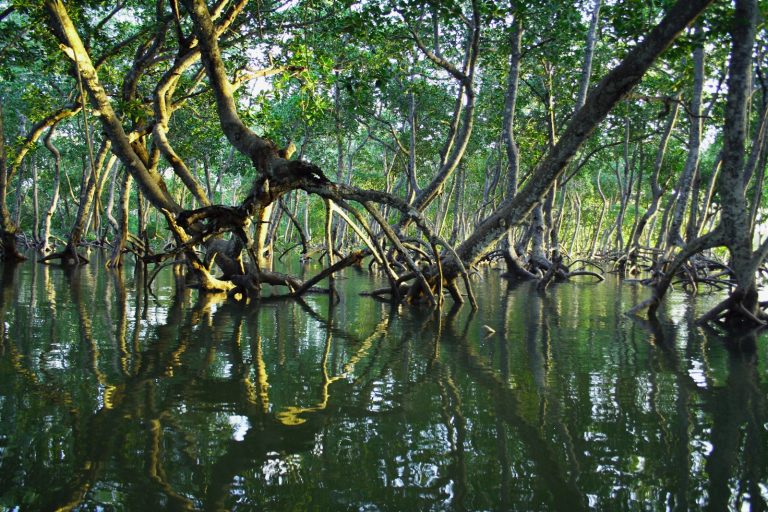
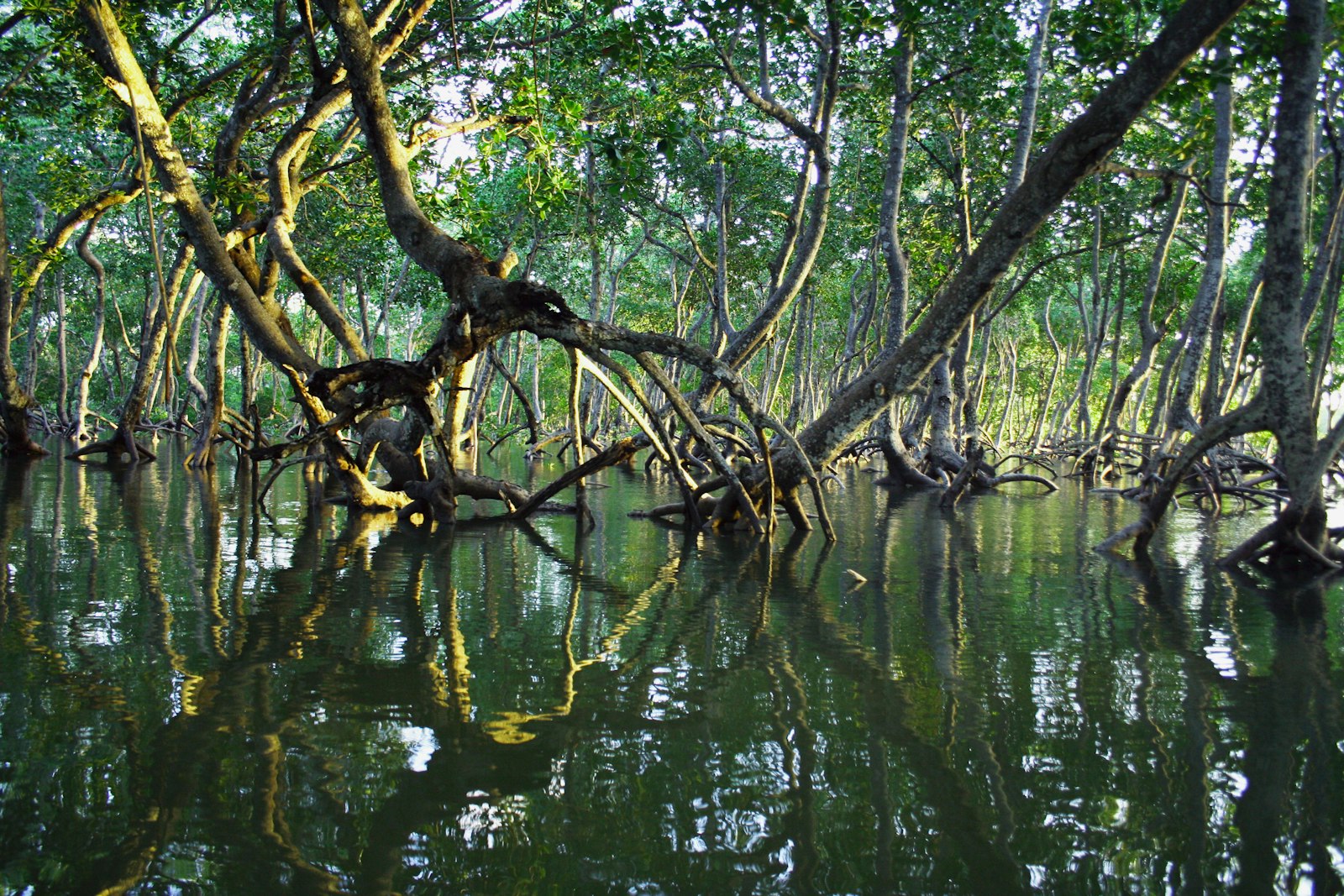
Pulau Ontoloe’s mangrove forest is the roosting habitat for Riung’s famous flying-fox colony — thousands of large fruit bats hang in the mangrove canopy by day and lift off toward the mainland at dusk. The mangroves themselves also support the local fishery and shoreline that most boat-day itineraries pass without stopping to examine closely.
What is Pulau Ontoloe and why does it matter?
Pulau Ontoloe, also referred to locally as “Bat Island,” is best known for the large colony of flying foxes (kalong) roosting in the mangrove trees along its shoreline. Mangrove forests like the one on Ontoloe serve a dual ecological role: they provide daytime roosting habitat for the bat colony, and — as in mangrove systems generally across Indonesia — act as nursery grounds for juvenile reef fish and a buffer against coastal erosion. Most Riung boat-day itineraries pass Ontoloe specifically for the dusk bat flight rather than for the mangroves as a standalone stop, which means the mangrove ecosystem itself is often seen but rarely explained to visitors in the moment.
When do boats pass the mangrove colony, and why does timing matter?
The flying foxes are visible resting in the mangrove canopy through the day, but the signature moment — thousands of bats lifting off together toward feeding grounds on the mainland — happens in the late afternoon to early evening as light fades. This means the mangrove/bat stop needs to be the last or near-last stop on your boat-day route, not an early-morning one; if your boatman schedules other islands first, confirm explicitly that Ontoloe is planned for late afternoon, not skipped for time.
What you’ll actually see and hear
Independent trip reports consistently describe the volume of bats as the most striking part of the experience — not a handful of animals but a dense, audible colony that becomes visually dramatic once movement starts near dusk. Bring a functioning camera or phone with some low-light capability if you want photos, since the best moment happens as light is already fading. This site has not located an official published population count for Ontoloe’s colony from BKSDA NTT, so avoid quoting a specific “thousands of bats” figure as verified data — treat descriptions of scale as consistent anecdotal observation rather than a measured statistic.
Should you ask to stop and look closely at the mangroves themselves?
Yes, if you’re interested — most boatmen will slow down or point out the mangrove shoreline if asked, since the standard itinerary is built around the bat-flight timing rather than an educational mangrove stop. If you have a particular interest in coastal ecology, mention it when negotiating your boat route (see the private boat charter page), since a private charter gives you more flexibility to linger here than a shared boat running a fixed group schedule.
Responsible viewing of the flying-fox colony
A few practical etiquette points apply to any wildlife-roost visit: keep noise reasonably low as boats approach the colony (loud noise can disturb roosting bats prematurely), don’t use bright flash photography aimed directly at the colony, and don’t ask your boatman to approach closer than the boat’s engine noise already requires — the spectacle works from a respectful distance and doesn’t improve by getting nearer.
Why mangroves matter beyond the bat colony
Mangrove ecosystems across coastal Indonesia generally provide three overlapping benefits that apply to Ontoloe’s forest even without site-specific published research: they serve as nursery habitat where juvenile reef fish shelter from predators before moving to open reef as adults, they stabilise shoreline sediment and reduce coastal erosion, and they support local fisheries that Riung’s own fishing-based economy still partly depends on. Seeing the bat colony is the visible, dramatic reason most visitors stop at Ontoloe, but the ecosystem doing the quieter work underneath it is arguably just as important to the wider health of the marine park.
Photography tips for the dusk bat flight
Because the colony’s departure happens as light is fading, standard daylight camera settings won’t work well — a phone camera with night or low-light mode performs noticeably better than a default auto setting, and bracing your arm against the boat’s rail reduces motion blur from the boat’s rocking. If photography matters to you, ask your boatman to position the boat with the fading sky behind the bats rather than facing directly into the remaining sun, which gives better silhouette contrast against the sky.
How this fits into your Riung boat day
Most standard day itineraries structure the day as: morning/midday snorkelling stops at one or two reef or beach islands, followed by Ontoloe in the late afternoon as the final stop before returning to the pier. See the 3-day itinerary for how this fits into a wider trip, and the turtles and rays page for what other wildlife to realistically expect on the same trip.
Frequently asked questions
What time of day should I visit the Ontoloe bat colony?
Late afternoon into dusk, when the colony begins its mass departure — this is the visually significant moment, not a daytime viewing of resting bats.
How many bats live in the Ontoloe colony?
This site has not located an official published population count. Independent trip reports consistently describe the colony as large and visually dramatic at dusk, but treat any specific number you see elsewhere as unverified.
Are the mangroves on Ontoloe protected?
Pulau Ontoloe sits within the Taman Wisata Alam Laut 17 Pulau Riung, managed by BKSDA NTT, which covers the marine park area generally; this site has not located mangrove-specific protection status documentation distinct from the park’s overall conservation designation.
Can I get off the boat and walk into the mangroves?
Standard boat-day itineraries view the colony from the water rather than landing and walking into the mangrove stand. Confirm with your boatman if closer access is possible and appropriate before assuming it.
Last updated: August 25, 2026
After appreciating the unique ecosystem of Riung’s mangroves, further exploration of the 17 Islands Marine Park and its broader marine environment naturally requires a suitable vessel. While local boats can facilitate mangrove tours, extending your journey to distant reefs or even integrating a Komodo leg often benefits from experienced operators. Consider scheduled multi-day trips or a dedicated private charter that navigates the wider Flores coastline with local expertise.
Planning the Ontoloe island mangroves stop in detail
Most visitors only see Pulau Ontoloe Riung at the end of a standard boat circuit, but a little planning lets you understand what is happening in the trees, how long you actually spend here, and how to fit the bat colony around snorkelling and beaches. Use the points below to brief your boat crew in clear, simple Indonesian or English before departure.
This section focuses on practicalities that regular Riung mangrove tour descriptions often skip: boat travel times, realistic wildlife expectations, how to ask for a closer look at the shoreline without disturbing the Riung mangrove bats, and how to combine Ontoloe with other Riung mangrove islands on a one-day private charter.
If you are still choosing islands for your route, the park’s main islets, including Ontoloe, are outlined individually in The Islands of Riung, One by One: Ontoloe, Rutong, Tiga and the Rest. Birders who are more interested in herons and kingfishers than bats should also look at Birdwatching Around Riung and Its Mangroves for non-marine-park options.
How long is the boat ride from Riung to Ontoloe, realistically?
Most wooden day boats take 30–60 minutes to reach Ontoloe from the Riung jetty, depending on sea state and how heavily the boat is loaded. Travellers asking how long the boat ride from Riung to Ontoloe is should assume closer to an hour if there is wind or chop. Build in extra time if you also want to idle slowly along the mangrove edge for photos and birdwatching.
What time do the flying foxes start leaving the mangroves in Riung on a typical day?
Boatmen usually aim to arrive about 30–45 minutes before the main flight, since what time do the flying foxes start leaving the mangroves in Riung depends on cloud cover and the month. In the dry season the colony often becomes active soon after sunset, with movement building in stages. Plan to be positioned near the Ontoloe island mangroves from around 17.00, and avoid needing to hurry back for land transport.
Is it possible to visit both the flying fox colony and the best snorkeling spots in one day in Riung?
Yes, it is possible to visit both the flying fox colony and the best snorkeling spots in one day in Riung if you leave the harbour by mid-morning. Most Riung mangrove boat tour itineraries head first to sand beaches and reefs, then loop back past Ontoloe in late afternoon. Check your fuel and drinking water situation before committing to a late return, especially in the hotter months.
Can I combine Ontoloe with other mangrove-focused stops or activities?
You can ask your skipper to trace more of the shore around Ontoloe or nearby islets that still have mangrove fringes, creating an informal Riung mangrove kayaking tour if your group has its own inflatable kayak. There is no dedicated rental service for this. For a cost breakdown of extending a standard loop to linger longer near mangroves, see How Much Does a Private Boat Tour in Riung Cost?.
Can children safely visit Ontoloe Island to see dragons or other large reptiles?
Families sometimes ask can children safely visit Ontoloe island to see dragons, confusing casual monitor-lizard sightings with guaranteed Komodo dragons. There is no structured, ranger-led dragon viewing here, and no infrastructure built for close encounters. Children can safely join a Riung mangrove tour by boat with standard precautions: lifejackets that fit, sun protection, and clear rules about staying seated when close to the mangroves or in choppy water.
Is it mandatory to have a ranger with you on Ontoloe for the bat viewing?
Visitors often ask whether a ranger must be aboard for the dusk stop at Ontoloe. Current practice is that boats watch the flying-fox colony at Ontoloe from open water without landing, so no on-board ranger is required. If your operator suggests a landing, follow their instructions about where you may step ashore and keep group size small and quiet.
What are the photographing Ontoloe Island flying fox colony ethical guidelines?
Basic photographing Ontoloe island flying fox colony ethical guidelines are simple: stay at a reasonable distance, avoid shining torches or flash directly into the mangrove roost, and keep boat noise as low as practical once bats start to move. Long lenses or phones in “night” mode will pick up the silhouettes without extra lighting. Treat the site as a nocturnal roost first and a photo subject second.
Where are the best sunrise over Ontoloe Island best viewing locations near Riung?
For sunrise over Ontoloe island best viewing locations near Riung are on land, not from a boat in the dark. Several homestays face east across the bay and give a clear line to Ontoloe’s profile. You can also walk to the waterfront before first light and watch the sky change above the Ontoloe island mangroves, long after the bats have already returned from night feeding.
Once you have planned a calm, well-timed pass along the Ontoloe mangroves and maybe a dusk bat stop, the next decision is whether to keep Riung purely local or add a Komodo leg with a crewed boat. If you decide to continue west, Komodo Luxury’s shared open trip departures, flexible private trip package options and shorter one-day trip package from Labuan Bajo are the most straightforward next step.
Keep reading
Uncategorized 11 min
Riung 17 Islands: What Changed for 2027
What's changed for Riung travel planning, most recent update first: a magnitude 7.7 earthquake struck north Flores on 15 August…
Uncategorized 11 min
Riung 17 Islands Solo Travel: Joining a Shared Boat
Riung 17 Islands as a solo traveller: the most cost-effective route is joining an existing group's shared boat rather than…
Uncategorized 11 min
Can You Dive at Riung 17 Islands?
Can you dive at Riung 17 Islands? No - there is no PADI dive centre or scuba operation based in…