Riung Boat Safety: Capacity, Life Jackets and What to Check
Riung Flores Editorial Desk 12 min read
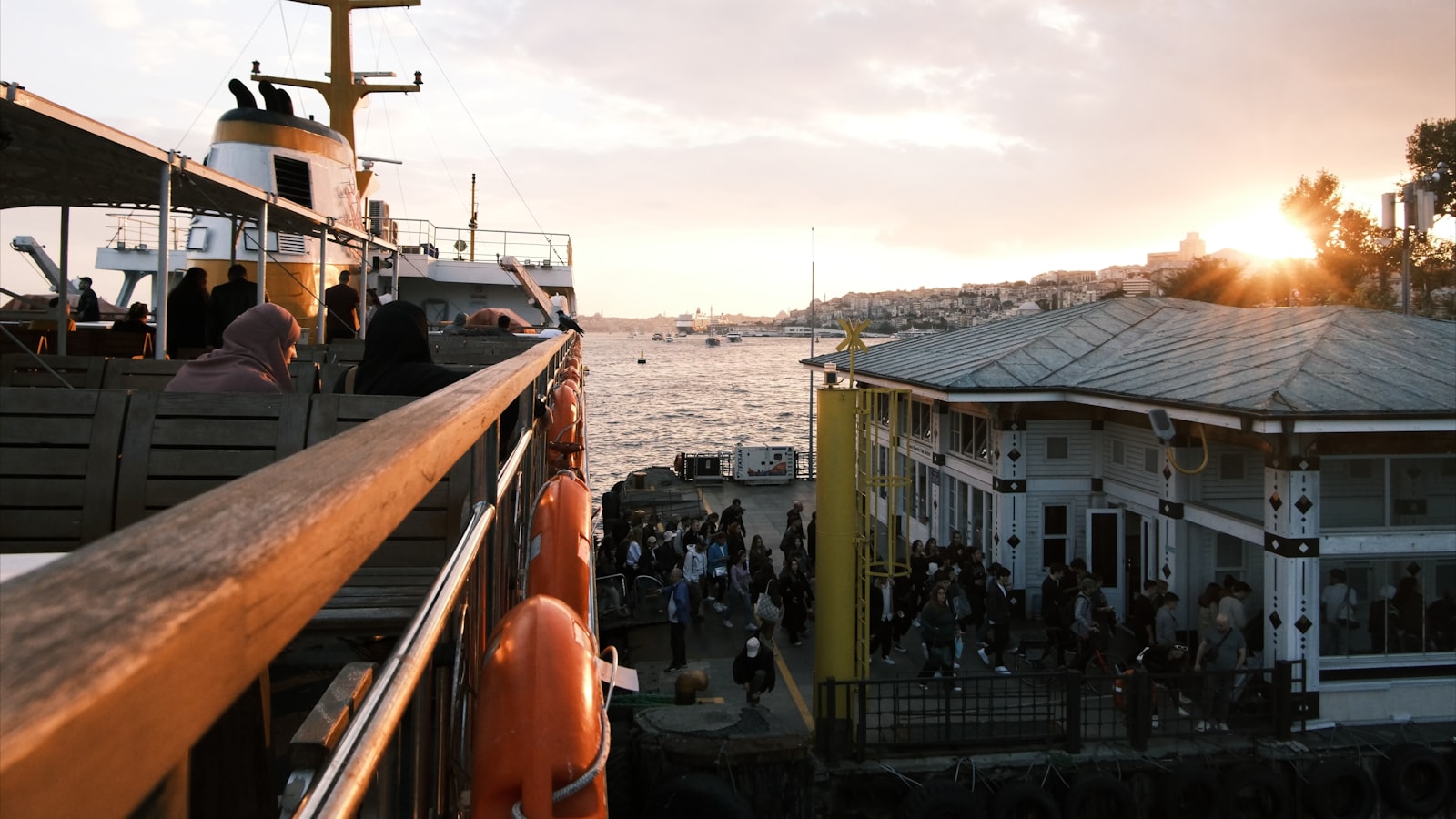
Before boarding any boat in Riung, check three things: a visible life jacket for every passenger, a boat that isn’t obviously overloaded, and a boatman willing to explain the day’s plan if you ask. These three checks catch the overwhelming majority of real safety issues on small-boat island tours anywhere in Indonesia, Riung included.
What should I check before boarding a Riung boat?
Riung’s boats are small, open wooden vessels or speedboats operated by local boatmen rather than large commercial ferries, which means the safety standard you should expect is different from a big-ship tour elsewhere. A practical pre-boarding checklist: confirm there’s a life jacket for every person on board (not just a few spares), check that the boat doesn’t look overloaded relative to its size, ask how many stops are planned and roughly what time you’ll return, and don’t be shy about asking the boatman directly about sea conditions that day. A boatman who answers these questions plainly and doesn’t rush you is generally a good sign.
How many passengers should a boat carry?
There’s no single published capacity figure we can cite for Riung’s boat fleet specifically — capacity depends on the individual boat’s size and construction, which varies boat to boat since these are locally-built wooden vessels rather than standardized commercial craft. The practical rule: if a boat looks crowded to the point where people can’t move safely or life jackets aren’t available for everyone, that’s a reasonable basis to ask for a different boat or decline the trip, regardless of what any operator tells you about “normal” capacity. Trust what you can see over what you’re told.
Are life jackets actually provided?
Reputable operators provide life jackets as standard, but enforcement and consistency vary between small independent boatmen. Don’t assume — ask explicitly before departure, and if traveling with children or weak swimmers, confirm child-sized life jackets are available specifically, since adult-sized ones don’t provide adequate protection for a small child. If a boat can’t provide proper life jackets for your group, it’s reasonable to decline and find another operator.
What about weather-related cancellations?
A boatman who cancels or reroutes a trip due to rough conditions is exercising good judgment, not being difficult. Riung’s boats are small and genuinely weather-dependent — see our sea conditions guide for the seasonal patterns that affect this. If a trip is cancelled for weather, treat rescheduling as the safe and correct outcome rather than something to negotiate around.
Do boats carry any safety or communication equipment?
We haven’t found a published, verifiable standard covering radio or emergency equipment specifically for Riung’s boat fleet, and it likely varies between operators given the informal, village-based nature of the boat economy here. If safety equipment beyond life jackets matters to you — a working radio, a first-aid kit on board — ask directly before booking rather than assuming it’s standard. This is a reasonable question to ask any operator, and a good one won’t be offended by it.
What’s the current strength like between islands?
Current strength isn’t uniform across the marine park — sheltered reef flats near several smaller islands tend to be calmer, while the channels near Pulau Ontoloe and its neighbors can run stronger, especially around tidal changes. If you or someone in your group is a weaker swimmer, say so before departure so the boatman can favor calmer stops. Full detail is in our sea conditions guide.
Do I have the right to refuse to board or ask to turn back?
Yes, plainly. If a boat looks unsafe, overloaded, or lacks basic safety equipment, you’re entitled to decline and look for another option — this isn’t rude, and any operator worth booking will understand it. Similarly, if conditions worsen mid-trip and you want to head back early, that’s a reasonable request, and a responsible boatman should take passenger comfort and safety seriously rather than pushing to complete a fixed route regardless of how the group feels.
Is Riung safe for solo travelers?
Generally yes — the same checks above (life jackets, boat condition, clear communication) apply whether you’re traveling solo or in a group. Solo travelers chartering a boat alone should expect to pay the full boat rate rather than a per-person split, since there’s no group to divide the cost across; see our cost breakdown for what that looks like in practice.
How does this compare to boat safety in Komodo National Park?
Komodo National Park’s boat operators, particularly those running multi-day liveaboards, tend to be larger, more established businesses with more formal safety standards than Riung’s village day-boat economy — a natural consequence of Komodo’s much larger tourism scale. That doesn’t mean Riung is unsafe, but it does mean the same due-diligence checklist above matters more in Riung, where enforcement and standardization are less developed. Established operators like Komodo Luxury run to a different scale and standard for the Komodo side of a combined trip.
What does a good pre-departure conversation with your boatman sound like?
A useful, non-confrontational way to raise safety questions: ask how many stops are planned and roughly what time you’ll return, ask directly whether life jackets are available for everyone including any children in your group, and ask what the conditions look like that day compared to a normal day. A boatman who answers plainly, without brushing off the questions, is generally signaling that he takes the trip seriously. If answers feel evasive or rushed, that’s worth weighing before you commit to that particular boat.
What role does group size play in safety?
Larger groups on a single boat mean less individual attention if something goes wrong, and a genuinely crowded boat is harder to move around safely if you need to reach a life jacket or shift position. If you have the option, a smaller group on an appropriately-sized boat is generally the safer configuration than the maximum number of people a boat can technically hold. This is also a point where price and safety can pull in opposite directions — a fuller boat is cheaper per person, but not always the better safety trade-off, particularly with children or nervous swimmers in your group.
Does travel insurance matter for a Riung boat trip?
Given the informal, village-based nature of the boat economy and Riung’s genuine remoteness from advanced medical facilities, travel insurance that explicitly covers water activities and evacuation is worth having for this leg of a Flores trip specifically, even if you wouldn’t normally think to check policy details for a snorkeling day. Confirm your policy covers the activity type (small-boat travel, snorkeling) and the region before you go, rather than assuming a general travel policy automatically includes it.
What’s the takeaway for a first-time visitor?
Treat the checklist at the top of this page — visible life jackets for everyone, a boat that isn’t overloaded, and a boatman who answers questions plainly — as non-negotiable minimums rather than nice-to-haves. Everything else on this page is useful context, but those three checks alone catch the large majority of real risk on a Riung boat day.
Frequently asked questions
Do children need special life jackets in Riung?
Yes — confirm child-sized life jackets are available before booking if traveling with young children; adult-sized jackets don’t provide adequate protection.
Can I ask to see the boat before booking?
Yes, and it’s a reasonable request. Most village boatmen operate out of the harbor where their boats are visible and can be inspected before you commit.
What should I do if I feel a boat is overcrowded?
Decline and ask for a different boat or a reduced group size. This is a legitimate safety concern, not an overreaction.
Is there a coast guard or emergency service in Riung?
We haven’t found a specific, sourced description of local emergency marine response infrastructure for Riung. Treat this as a genuinely remote destination for emergency response purposes and plan accordingly — travel insurance covering marine activities is worth having.
Related reading
- Riung 17 Islands sea conditions: visibility, currents and swell
- Riung 17 Islands snorkeling trip guide
- What a Riung 17 Islands trip really costs
Terakhir diperbarui: 25 Agustus 2026.
Sources
- Direktorat Jenderal Perhubungan Laut (Ministry of Transportation, Sea Transportation) — the government authority for domestic passenger-vessel safety, including life-jacket provision
- Ditjen Hubla life-jacket safety campaign (Ministry of Transportation) — an official example of how life-jacket-per-passenger compliance is enforced nationally
- BASARNAS (national search-and-rescue agency) — who to contact in a genuine maritime emergency, as noted above
Extra practical checks for a safe Riung 17 Islands boat day
Beyond basic Riung boat safety life jackets and not overloading the boat, a few extra habits make a real difference: how you brief your group, what you personally bring, and how you react if conditions change mid-trip. These are the small details that separate a relaxed island day from an avoidable scare.
The advice below assumes you are on a typical Riung snorkeling trip: a small wooden boat, 3–5 stops, and mixed swimming ability in the group. It also touches on Riung village life and how the local, non-corporate nature of the fleet influences safety norms and expectations.
For deeper background on currents, recent incidents and realistic risk levels, read the broader overview in Riung 17 Islands Safety: Boats, Currents, Real Risks. If you are travelling with kids, also cross-check pace and equipment suggestions in Family Trips to Riung and Komodo: Kids, Safety and Pace before committing to a long day at sea.
What safety equipment should I expect on boats in Riung (life jackets, radio, etc.)?
On a typical day boat, expect a small outboard engine, basic anchor, and simple first-aid supplies if the operator is organised. On safety standards and equipment, the only items you should absolutely insist on are enough serviceable life jackets and a sober, attentive skipper. VHF radios and flares are not universal, so do not assume big-ship gear.
Are there life jackets and snorkeling gear included on most boat trips in Riung?
The availability of life jackets on Riung 17 Islands Marine Park boats is now fairly standard, but you still need to ask. Most day trips include basic masks and snorkels, though quality varies. If hygiene matters to you, bring your own mask. Fins are less common. Clarify whether fuel, lunch and gear are included when you negotiate, or check your guesthouse’s standard inclusions.
Are life jackets for children available on Riung boats, or do we need to bring our own?
Are life jackets for children available on Riung boats is a question with a mixed answer: some boatmen have a few smaller vests, many only carry adult sizes. For under-10s or weak swimmers, the safest approach is to bring a properly fitted child PFD from home. Use this page and Marine Life at Riung 17 Islands: What You Actually See to plan gentle snorkel spots and realistic swim times.
Are life jackets provided on boats in Riung 17 Islands for nervous swimmers?
If you ask directly, most operators will confirm that life jackets are available and will set them out before departure. The phrase are life jackets provided on boats in Riung 17 Islands is understood locally, but you may need to physically point and count vests. Nervous swimmers should wear them whenever the boat moves and during any snorkeling stop with noticeable chop or current.
Is it safe to swim between the islands in Riung, or should we always stay near the boat?
Is it safe to swim between the islands in Riung depends entirely on conditions and your ability. Currents in the channels can be deceptively strong even on clear, calm days. Treat any Riung snorkeling trip boat safety conditions as boat-based: enter and exit the water close to the ladder, avoid long crossings, and keep at least one confident swimmer on board to watch the group at all times.
Should I wear a rash guard for sun protection while snorkeling in Riung?
Yes, you should. Tropical sun plus reflection from the water means you burn fast, even on cloudy days. The answer on whether to wear a rash guard for sun protection while snorkelling in Riung is almost always yes, ideally long-sleeved, paired with leggings or boardshorts. This reduces reliance on sunscreen, helps avoid jellyfish stings, and keeps you warmer during longer snorkels in the dry-season breeze.
Is Riung paddle boarding or using inflatables a good idea on a standard boat tour?
Riung paddle boarding is only sensible if you are experienced, conditions are flat, and your skipper agrees. Most boats are not set up to carry large boards safely. Small inflatables or tow rings are better left at your homestay; they blow away quickly and distract from watching actual swimmers. If you do bring a board, treat it as a near-shore activity at sheltered beaches only.
Do you need to show travel insurance at the Riung Marine Park office, and is it recommended?
You do not currently need to show travel insurance at the Riung marine park office when paying the retribusi. However, is travel insurance recommended specifically for boat trips in Riung is an easier call: yes. You are far from major hospitals, and evacuations are costly. Choose a policy that explicitly covers small-boat trips and snorkeling in Indonesia, not just big-ship cruising.
How do bemo departure times between Mbay and Riung affect a same-day boat plan?
Public transport on the north coast is slow and irregular. Bemo departures on that stretch can slip by one to two hours from what locals quote, and late arrivals often miss the morning wave of boats. If you want a same-day tour, arrive in Riung the night before, walk the waterfront at sunset, and lock in your operator and meeting time directly with the boatman.
After you have checked life jackets, asked about currents and understood Riung village life around the waterfront, you might decide to keep Riung low-key and fold in a more structured Komodo leg with a professional crewed boat. For that part of the trip, review the mixed-size options in their Komodo boat fleet, compare comfort using a specific vessel such as Komodo Prestige, or plan a flexible multi-island Komodo boat tour after Riung.
Keep reading
Uncategorized 11 min
Riung 17 Islands: What Changed for 2027
What's changed for Riung travel planning, most recent update first: a magnitude 7.7 earthquake struck north Flores on 15 August…
Uncategorized 11 min
Riung 17 Islands Solo Travel: Joining a Shared Boat
Riung 17 Islands as a solo traveller: the most cost-effective route is joining an existing group's shared boat rather than…
Uncategorized 11 min
Can You Dive at Riung 17 Islands?
Can you dive at Riung 17 Islands? No - there is no PADI dive centre or scuba operation based in…