Riung 17 Islands Liveaboard: Complete Price Guide
Riung Flores Editorial Desk 13 min read
- What the rate usually covers: the vessel and its crew, meals aboard, snorkelling gear and guiding. Scuba, where a boat offers it, belongs to the Komodo leg rather than to Riung.
- What moves the price: the vessel itself, the number of nights, and the season — the dry months run April to November, calmest and clearest June to September.
- Billed separately: national park fees, crew gratuity and premium drinks. None of these sit inside the charter rate.
Riung sits on the north coast of Flores, on the Flores Sea, and it has guesthouses rather than resorts. On a multi-night trip the vessel is the accommodation, the kitchen and the snorkelling platform at once, which is why the cost conversation here starts with the boat and not with a nightly room rate. This page sets out what a whole-boat charter rate does and does not include, which costs are billed on top of it, and where to read the operator’s own published figures rather than an invented range. This guide does not operate boats. Bookings are fulfilled by Komodo Luxury, and this site may earn a referral commission.
What a Whole-Boat Charter Rate Actually Includes
A whole-boat charter is not a boat rental. It is a crewed, catered base of operations, and at the top of the market the charter fee is, in practice, the beginning and the end of most spending: operators market these vessels on the basis that guests arrive with their luggage and do not reach for a wallet again until the crew gratuity at the end. That all-inclusive philosophy is comprehensive. It covers a private chef and galley team producing full meals through the day, plus snacks, fresh juices and soft drinks. It includes an expedition leader and, on vessels that continue west into Komodo National Park, dive staff. That scuba element belongs to the Komodo leg out of Labuan Bajo; Riung itself has no dive centre or scuba operation, so within the 17 Islands the water programme is snorkelling. Quality snorkelling equipment is standard. Crew numbers on this class of boat are high relative to guest numbers, which is what makes the service feel unhurried. When working through the complete budget for a Riung trip, it is that level of staffing and provisioning that explains the rate.
The Phinisi Fleet: Tiers of Luxury and Their Associated Costs
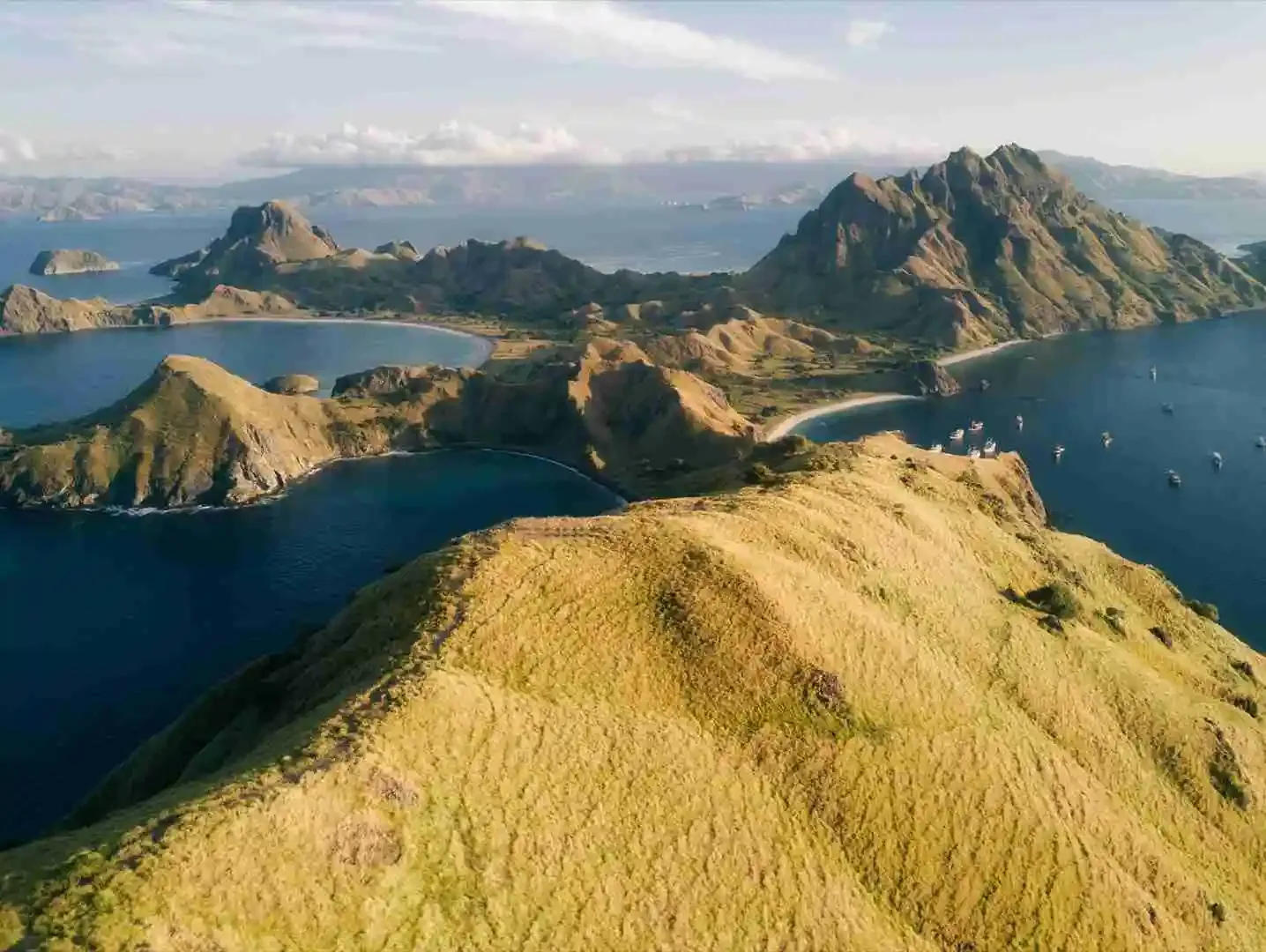
The vessel itself is the single biggest variable in what a liveaboard around Riung ends up costing. The most sought-after boats are modern phinisi, traditional Indonesian two-masted sailing ships built from ironwood and teak and fitted out to contemporary standards. According to the historical record, this shipbuilding tradition is documented among the Bugis and Makassar peoples of South Sulawesi over several centuries. The market sorts itself into tiers by hull length, cabin count and fit-out, and every tier is quoted per boat per night rather than per guest. Because those rates change and this guide does not track them, the honest way to read the ladder is on the operator’s own page: Komodo Luxury lists its fleet, cabin counts, guest capacity and the published nightly rate for each vessel, together with the tax treatment that applies, on its luxury phinisi charter page. Where a vessel is quoted on request rather than published, that is stated there too — and a rate that is not published anywhere is a rate this guide will not invent.
Seasonality and Itinerary: How Time and Tide Affect Your Invoice
The seasons shape both the experience and the price in Flores. The chartering window is the dry season, April through November, with the calmest and clearest conditions from June to September. Those months are also the busiest, and demand on the best-regarded boats is highest then; July and August in particular are booked a long way ahead, and a specific vessel on specific dates is the constraint rather than the region as a whole. Itinerary length matters as much as season. A classic Komodo-centric route starting and ending in Labuan Bajo covers Padar Island’s viewpoint, the reefs at Batu Bolong and the dragon sites on Rinca. Extending the voyage lets the boat push further east along the north coast toward Riung and the 17 Islands Marine Park. Longer voyages mean more engine hours and more provisioning, and that is what shows up on the invoice. For an in-depth look at what these archipelagos hold, the Riung Flores guide hub is the place to plan the route.
The Hidden Ledger: Park Fees, Gratuities, and Other Ancillaries
While the charter fee is largely all-inclusive, several significant costs are billed separately. The most notable are the national park fees. Komodo National Park, a UNESCO World Heritage site, has its own tariff structure. Under Indonesia’s official park tariff regulation (PP 36/2024), foreign visitors pay a flat entrance fee (PNBP) of IDR 250,000 per visit, which already covers trekking, wildlife viewing and snorkelling inside the park boundaries — there is no separate multi-day pass or add-on permit for these activities. A mandatory park ranger fee of roughly IDR 150,000 per group of up to five guests applies in addition, since every group must be accompanied by a ranger. In practice that works out at roughly IDR 400,000 to 525,000 per person per day for the official park costs, layered on top of the charter fee. The second ancillary cost is crew gratuity, a deeply ingrained part of yachting culture and a real component of crew income; it is customary, discretionary, and paid in cash to the captain at the end of the voyage for distribution among the crew. Other costs sit outside the rate too: premium alcohol beyond the house selection, onboard spa treatments, and the domestic flights to Labuan Bajo, the main port of embarkation, which are booked separately from the charter. It is worth reading the boat and charter breakdown with these additions in mind.
The Value Proposition: Why a Private Charter Transcends a Resort Stay
Is it worth it? From an editor’s perspective, the value of a luxury liveaboard is not found by comparing it to a land-based resort, but by understanding what it uniquely provides: absolute freedom and exclusive access. A resort, no matter how luxurious, tethers you to a single location. A private charter transforms the entire Flores Sea into your personal domain. Each morning, you awaken in a new, pristine anchorage, often without another soul in sight. The day’s agenda is yours to command. Perhaps a pre-dawn trek up a volcanic peak, followed by a dive with a squadron of manta rays at Manta Point, and an afternoon spent paddleboarding into a hidden lagoon. The appeal repeat charterers describe is autonomy: on land you book an excursion, whereas here the whole archipelago is the excursion, with no schedule beyond the one agreed with the captain each morning. That is the core philosophy behind a Riung experience. Furthermore, the top-tier operators are deeply invested in the region’s preservation, working with local communities and funding conservation initiatives. The value, then, is not just in the thread count of the linens or the vintage of the wine, but in the profound connection to one of the planet’s last marine frontiers, experienced in a way that is both deeply personal and sustainable.
Quick FAQ on Luxury Liveaboard Pricing
Can I book a single cabin instead of a full charter?
Yes. A few high-end vessels sell cabins on set departure dates rather than only whole-boat charters, which suits couples and small groups. Cabin rates, where they exist, are published by the operator alongside the whole-boat rate; this guide does not restate a per-cabin figure it cannot point to. For a bespoke route and full control of the schedule, a private charter remains the stronger option.
Are the charter prices negotiable?
Generally, no. Prices for these premier vessels are firm, especially during the peak season from June to September. The value is in the unparalleled service and vessel quality. Booking more than a year in advance or during a shoulder season might occasionally yield added inclusions, but direct discounts are rare in this high-demand market.
What is the best way to book a charter in Flores?
Engaging with a specialist travel designer or a reputable fleet operator is paramount. They possess intimate, firsthand knowledge of each vessel, its crew dynamics, culinary strengths, and diving expertise. This ensures a perfect match for your group’s specific desires. Working with an established, licensed local operator is also the practical way to be sure the vessel’s paperwork and safety equipment are in order; Indonesia’s national tourism portal, Indonesia.travel, is a starting point for background on the region, not a register of approved charter companies.
Is specialized travel insurance required?
It is absolutely essential and will be required by the charter operator before you board. A comprehensive policy must include trip cancellation, interruption, and, most critically, medical evacuation coverage that specifically includes scuba diving incidents. Companies like DAN (Divers Alert Network) offer specialized plans that are highly recommended.
A whole-boat charter in Flores is a significant outlay, and it buys something specific: privacy, an itinerary set with the captain rather than a schedule, and access to anchorages that day boats do not reach. That is the honest case for it, and it is the reason the arithmetic on this page keeps the boat, the park fees and the gratuity as three separate lines rather than one blurred total. This guide does not operate boats. Bookings are fulfilled by Komodo Luxury, and this site may earn a referral commission. Published rates, vessel-by-vessel, are on Komodo Luxury’s phinisi charter page.
After reviewing Riung liveaboard pricing, many travellers consider extending their trip to the more established Komodo region. To understand the standards and costs for a multi-day charter, Komodo Luxury’s deluxe charter options offer a clear benchmark. Even their one-day tour packages provide transparent cost breakdowns, while their main sailing tours page is a practical starting point.
How a Riung Liveaboard Fits into a Wider Luxury Budget
If you are already planning a six-figure charter, the marginal cost of including Riung and the 17 Islands is mostly fuel, extra cruising days, and permits. The core yacht cost barely shifts; what changes is how you allocate nights across Flores, Komodo, and more remote arcs like Sumbawa or Alor, and how much of your overall luxury stay Riung you want on the water rather than on land.
Because Riung has guesthouses rather than high-end resorts, a liveaboard trip Riung 17 islands effectively replaces the absence of on-island luxury. Your financial decision is less villa-versus-yacht and more: how many nights of full-crew, full-fuel operations are worth it in this quieter park compared with busier icons such as Komodo National Park or Raja Ampat.
If you are weighing a shorter liveaboard plus a few nights ashore, compare your yacht quote with an all-inclusive land package: our Riung all-inclusive price guide breaks down what comparable comfort costs once you add private boats, transfers and guided excursions to the 17 Islands Marine Park.
Is Riung best done as a stand-alone yacht charter or as an add-on to Komodo?
For most guests commissioning a luxury phinisi, Riung works best as an add-on rather than a stand-alone destination. A common pattern is to charter out of Labuan Bajo, spend several days in Komodo, then continue over the north coast toward Riung for one to three quieter days. You pay for extra sailing hours, but the crew and provisioning structure remain unchanged.
How many nights should I budget on board specifically for Riung?
Two full days on site, which typically means three nights on board, is the sweet spot for Riung. That allows half a day of repositioning, one day focused on snorkelling and beaches, and one split between Ontoloe’s flying fox colony and more remote sandbars. Longer stays are possible if you pair Riung with the uninhabited islets toward north-central Flores.
Can a Riung liveaboard replace a high-end resort stay elsewhere in Flores?
In practical terms, yes. Because Riung has simple homestays instead of resorts, a well-specified yacht becomes your only five-star base. Travellers who might otherwise book a private villa near Labuan Bajo often find that diverting that budget into additional nights at sea yields more privacy, softer schedules, and far better marine access, especially for dedicated snorkellers and divers.
What cost differences should I expect between Riung and a Komodo-only charter?
The vessel’s weekly rate rarely changes; what changes is itinerary complexity. Adding Riung means more engine hours, potentially higher fuel surcharges, and extra local arrangements for the 17 Islands Marine Park entry retribusi, which operators usually fold into your overall invoice. Compared with a Komodo-only loop, expect the extra sailing time and the separate 17 Islands arrangements to show on the invoice; ask the operator to itemise them rather than folding them into a single figure.
Does seasonality affect Riung pricing differently from Komodo?
Both areas share the same dry season from April to November, with June to September generally calmest and clearest. Charter pricing typically peaks across this window for the region as a whole, rather than for Riung in isolation. You might, however, negotiate better value by placing your Riung days on the shoulders of a longer Flores route, where boats prefer to keep schedules full between headline Komodo departures.
How does Riung compare in value to other remote Indonesian yacht destinations?
Against marquee regions like Raja Ampat, Riung often comes in as a relative bargain on a per-day basis, largely because access is overland rather than via long repositioning sails. The experience is quieter and more low-key, but still rich in marine life. For an overview of how different archipelagos stack up logistically, start with our Flores liveaboard cabins and routes guide.
What if I am not ready for a full private charter budget?
If a private phinisi is beyond your current budget, you can still sample Riung by combining a local day boat with a modest guesthouse stay. Then, when you are ready to step up to a cabin or whole-yacht charter elsewhere in Indonesia, use our liveaboard pre-voyage checklist to understand where the money goes and which inclusions matter most to your style of travel.
Once you have a realistic ceiling for a Riung liveaboard charter, the next decision is where to extend that investment: a cabin-based Komodo liveaboard, a slower wellness-focused yacht charter, or a future Raja Ampat expedition. That is usually the point when planning spreadsheets give way to concrete dates, vessel names, and a conversation with a specialist broker.
Keep reading
Uncategorized 11 min
Riung 17 Islands: What Changed for 2027
What's changed for Riung travel planning, most recent update first: a magnitude 7.7 earthquake struck north Flores on 15 August…
Uncategorized 11 min
Riung 17 Islands Solo Travel: Joining a Shared Boat
Riung 17 Islands as a solo traveller: the most cost-effective route is joining an existing group's shared boat rather than…
Uncategorized 11 min
Can You Dive at Riung 17 Islands?
Can you dive at Riung 17 Islands? No - there is no PADI dive centre or scuba operation based in…